Beyond Plantation: Peepal Baba on Restoring India’s Ecosystems Through Trees, Water and Community Action
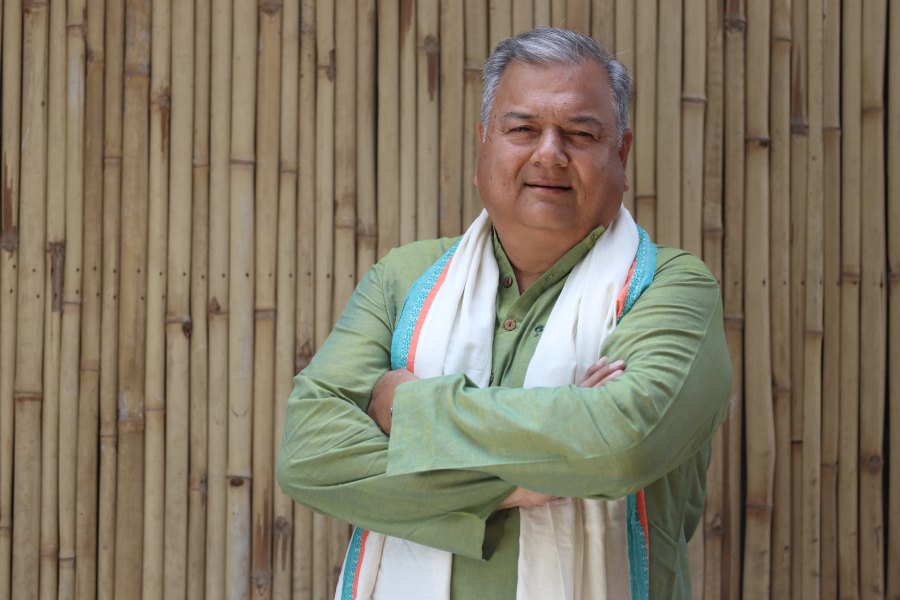
Environmental conservation is no longer limited to planting saplings, it demands a deeper commitment to restoring entire ecosystems. As climate change, groundwater depletion, biodiversity loss and rapid urbanisation continue to reshape India's environmental landscape, the need for long-term, science-backed ecological restoration has never been greater. Few individuals have championed this cause as consistently as Swami Prem, popularly known as Peepal Baba, whose Parivartan – Give Me Trees Trust has transformed environmental stewardship into a nationwide people's movement.
In this exclusive interview with TheCSRUniverse, Swami Prem Parivartan (Peepal Baba) shares the inspiration behind his lifelong mission to protect nature and explains why restoring ecological balance requires much more than increasing plantation numbers. He discusses the interconnected role of trees, water, soil and biodiversity in building climate resilience, while highlighting the importance of groundwater recharge, watershed restoration and native species conservation in creating self-sustaining ecosystems.
Read the full interview:
Q. What inspired you to begin your environmental journey and start the “Give Me Trees” movement?
A. My journey began when I started witnessing rivers drying, groundwater falling, and trees disappearing rapidly across India. I realized that environmental destruction is not a future problem — it is already affecting people’s health, livelihoods, climate, and water security.
Working closely with communities taught me one simple truth: if we protect trees and water, we protect life itself. That realization inspired me to dedicate my life to environmental restoration. “Give Me Trees” started as a personal commitment, but gradually became a people’s movement driven by collective responsibility towards nature.
Q. How has the organization evolved over the years, and what are the key sustainability areas you are currently focusing on?
A. Initially, our work focused mainly on plantation drives. But over time, ground experience taught us that planting trees alone is not enough. Ecosystems survive only when trees, soil, water, and biodiversity are restored together. Interview Responses – Swami Prem Parivartan (Peepal Baba)
Today, our focus includes afforestation, groundwater recharge, biodiversity restoration, urban greening, water conservation, and environmental awareness. We work on creating self-sustaining ecosystems rather than short-term environmental campaigns.
Q. Why do you believe biodiversity conservation and ecological balance are critical in today’s environmental landscape?
A. In nature, everything is interconnected. Birds, insects, forests, soil microbes, and water systems all work together to maintain ecological balance. Scientifically, biodiversity strengthens ecosystem resilience and helps regulate climate, soil fertility, pollination, and water cycles.
Through my fieldwork, I have seen that whenever biodiversity declines, environmental problems increase rapidly — whether it is soil degradation, water scarcity, or rising temperatures. Protecting biodiversity is ultimately about protecting human survival.
Q Your initiatives go beyond plantation drives. How do your efforts in tree plantation, water conservation, and groundwater recharge contribute to long-term environmental sustainability?
A. Trees and water are deeply connected. Scientifically, healthy tree cover improves rainfall absorption, reduces soil erosion, increases groundwater recharge, and lowers surface temperatures.
That is why our work combines plantations with rainwater harvesting, recharge pits, watershed restoration, and revival of degraded land. On the ground, I have seen barren areas slowly recover when trees and water conservation efforts are implemented together. Sustainability happens when ecosystems are restored as a whole.
Q. How important is community participation, especially youth involvement and volunteer engagement, in driving the success of your environmental initiatives?
A. Environmental protection cannot succeed without public participation. Communities protect what they emotionally connect with. In my experience, the survival rate of trees increases significantly when local people become caretakers rather than just participants.
Youth involvement is especially important because they bring energy, awareness, and long-term commitment. Every volunteer becomes an environmental ambassador who influences many others. Real change happens when environmental responsibility becomes a collective culture.
Q. What are some major challenges you face while implementing projects at the grassroots level, and how do you overcome them?
A. The biggest challenge is not plantation — it is long-term maintenance and mindset change. Many people still view environmental work as a symbolic activity rather than an ongoing responsibility.
Water scarcity, degraded soil, grazing pressure, and lack of awareness are common ground-level challenges. We overcome them through continuous community engagement, scientific plantation methods, native species selection, and regular monitoring. Patience is essential because ecological restoration takes time.
Q. Could you share a recent project or impact story that reflects the meaningful change created by your organization?
A. Recently, we worked on restoring a degraded area suffering from deforestation and severe groundwater depletion. Initially, the land was dry, biodiversity was almost absent, and local communities faced water stress.
Through plantation, soil conservation, and groundwater recharge interventions, the area gradually transformed. Native vegetation returned, birds reappeared, and groundwater levels improved. For me, the most meaningful outcome was seeing local communities take ownership of protecting the ecosystem.
Q. What is your long-term vision for building a greener and more sustainable future?
A. My vision is to create environmentally conscious communities where sustainability becomes part of daily life, not just policy discussions. I want to see restored forests, cleaner rivers, water-secure villages, and greener cities coexisting with development.
Scientifically and socially, climate resilience can only be achieved when ecological restoration becomes part of national thinking. My message is simple: nature can recover if we act responsibly and collectively.
Q. Many plantation drives focus on numbers, but long-term survival matters most. How does Give Me Trees Trust ensure sustained ecosystem impact?
A. For us, plantation is only the first step. The real success lies in survival and ecosystem recovery. Scientifically, native species have higher survival rates and support local biodiversity better, so we prioritize ecological suitability over numbers.
We ensure regular monitoring, watering support, soil improvement, community involvement, and post-plantation care. From my experience, environmental work should never become a photo opportunity or a statistics-driven activity. A single tree that survives for decades creates more impact than thousands planted without care.







.png)