ZEISS India: Advancing Purpose Driven Innovation Across Education, Healthcare, and Environment
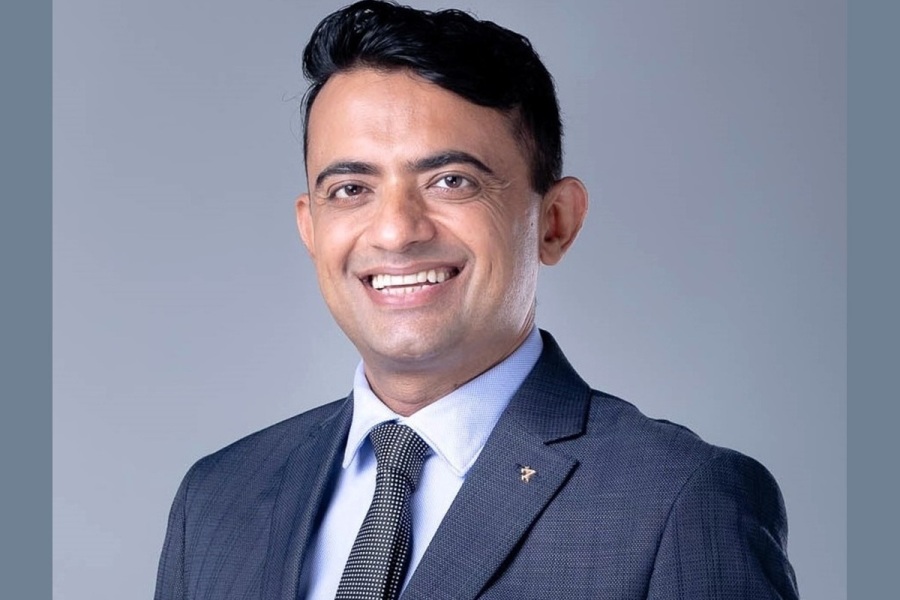
In a country as diverse and fast evolving as India, corporate social responsibility has moved beyond philanthropy to become a critical lever for inclusive and sustainable development. From strengthening public healthcare systems and nurturing scientific talent to restoring fragile ecosystems and bridging the digital divide, the role of responsible corporations is central to India’s long term social progress. In this conversation with TheCSRUniverse, Dhaval Radia, CFO, ZEISS India, shares how the organization’s CSR philosophy is deeply rooted in purpose driven innovation and long term impact. He offers insights into how ZEISS India aligns its global values with local needs, leverages its core expertise in optics and imaging, and designs initiatives that empower communities, build resilient ecosystems, and contribute meaningfully to India’s education, healthcare, and sustainability landscape.
Scroll down to read the full interview:
Q. ZEISS India has a diverse CSR portfolio across environment, education, and healthcare. How do you internally decide which social challenges to prioritise, and what values guide these decisions?
A. As a foundation-led organization, ZEISS approaches CSR not as a peripheral obligation, but as a core expression of our responsibility to society. In India, we prioritize social challenges by combining three lenses: alignment with ZEISS’s global CSR pillars, data-driven understanding of local community needs, and the relevance of our core competencies. Our focus areas - education, healthcare, and environment & sustainability - are chosen because they sit at the intersection of pressing societal gaps and where ZEISS can create differentiated, long-term value. For instance, our expertise in optics and imaging naturally enables us to strengthen eye-care access and scientific education, while our sustainability initiatives reflect a deep commitment to environmental stewardship and intergenerational responsibility. Ultimately, our decisions are guided by values of innovation with purpose, inclusivity, and long-term impact - ensuring that each initiative is both socially meaningful and strategically coherent.
Q. Across your CSR pillars, what long-term societal impact does ZEISS India ultimately hope to leave behind, and how do you ensure each initiative aligns with that larger mission?
A. ZEISS India aspires to leave behind a legacy of empowered communities, improved quality of life, and a more sustainable future. Across education, healthcare, and environmental stewardship, our long-term ambition is to enable people and ecosystems to thrive well beyond the life cycle of individual projects. We ensure alignment with this larger mission by designing initiatives that are sustainable by intent whether through capacity building, knowledge transfer, or ecosystem strengthening. Each program is anchored in ZEISS’s core strengths, delivered through credible partnerships, and structured to create multiplier effects rather than short-term outcomes. This disciplined approach allows us to stay true to ZEISS’s values while ensuring that our CSR efforts translate into enduring societal progress.
Q. Your afforestation project in Pali uses the Miyawaki method, which accelerates biodiversity renewal. How do you evaluate ecological success beyond plantation numbers, and what early behavioral changes in the ecosystem have you observed?
A. The Miyawaki afforestation project in Pali, Rajasthan, was conceived as a response to severe environmental degradation driven by industrialization, water stress, and biodiversity loss. While planting over 30,000 native trees that will eventually grow exponentially to create an entire forest in a resource and rain depleted zone, is a visible milestone, ecological success for us is measured far beyond plantation numbers. It is always about how we can make and improve the quality of air, water and food for all living beings on earth. We assess outcomes through indicators such as soil regeneration, water retention, biodiversity revival, and the ecosystem’s ability to become self-sustaining. Early behavioral shifts such as the return of pollinators, increased bird activity, and denser undergrowth are encouraging signs of ecological recovery. These observations reinforce our belief that nature-based solutions, when executed thoughtfully, can deliver rapid yet resilient environmental restoration.
Q. The school benches initiative in Bengaluru showcases creative reuse of industrial waste. What insights has ZEISS gained about circularity from this project, and do you intend to scale similar resource-repurposing models across other operations?
A. The school benches initiative in Bengaluru offered powerful insights into the practical application of circular economy principles. By repurposing wooden crates used for equipment imports, we were able to simultaneously reduce waste and address a critical infrastructure gap in underserved schools. Over 700+ benches have already been deployed in 20 schools, that helps over 2500+ students to learn and grow every year. This project reinforced a key learning for ZEISS: circularity does not always require complex systems sometimes it begins with rethinking waste as a resource. It also demonstrated how environmental responsibility and social impact can be delivered through simple, scalable interventions. Building on these learnings, we continue to explore opportunities to embed resource-repurposing and circular design thinking across our operations wherever it is practical and impactful.
Q. With the Core Imaging Facility at Ashoka University and the Advanced Microscopy Training Program, how is ZEISS shaping the next generation of scientific talent in India, and what unique data or research outcomes do you hope to unlock through these programs?
A. Through the Core Imaging Facility at Ashoka University and the Advanced Microscopy Training Program, ZEISS India is actively contributing to the development of future-ready scientific talent. These initiatives provide students and researchers with access to cutting-edge imaging technologies, coupled with hands-on training that bridges the gap between academic theory and applied research. Our objective is to strengthen India’s scientific ecosystem by enabling high-quality, interdisciplinary research and building deep technical capability in life sciences and materials research. Over time, we expect these programs to unlock meaningful research outcomes, foster innovation, and nurture a generation of scientists equipped to address complex global challenges.
Q. The ZEISS POWER ON initiative addresses both e-waste and digital inclusion. Based on your experience, what patterns have you noticed in how access to refurbished devices influences academic performance or confidence among high-achieving students from underserved communities?
A. Through the ZEISS POWER ON initiative, we have observed a clear link between digital access and student confidence, capability, and aspiration. Providing refurbished laptops not only enables academic continuity but also fosters digital literacy, self-reliance, and readiness for higher education. In some ways, it also helps reduce the digital divide in our country for people with limited resources. Students have shared how access to technology improved their classroom participation, learning outcomes, and overall confidence particularly in navigating a digitally driven academic environment. At the same time, extending the lifecycle of devices addresses the growing challenge of e-waste. These outcomes reinforce our belief that digital inclusion and environmental responsibility can and should be addressed together.
Q. Your partnership with Vidya Prasarak Mandal resulted in a 90% improvement in teaching quality. What specific behavioural or cultural shifts within the school ecosystem contributed to this change, and how do you plan to gather longitudinal data to measure sustained impact?
A. The 90% improvement in teaching quality at Vidya Prasarak Mandal was driven by deep behavioral and cultural change within the school ecosystem. Structured interventions focusing on communication skills, mindfulness, stress management, and emotional well-being helped teachers rediscover confidence and purpose in their roles. This focus on teacher empowerment created a more collaborative and positive classroom environment, leading to higher student engagement and improved learning outcomes. Importantly, the transformation went beyond infrastructure and it reshaped mindsets. To assess sustained impact, we plan to track longitudinal indicators such as teacher retention, classroom practices, and student performance, in close partnership with the institution.
Q. In healthcare, ZEISS India has supported neonatal upgradation and cataract surgery capabilities. How do you balance the need for high-tech medical equipment with the realities of accessibility and affordability in underserved regions?
A. ZEISS India approaches healthcare CSR with a clear understanding that technological excellence must be matched with accessibility and affordability. While we bring advanced medical equipment and expertise, we work closely with hospitals, public institutions, and local partners to ensure these solutions are deployed sustainably. Our focus is on strengthening existing healthcare infrastructure rather than creating parallel systems, whether through neonatal care upgrades or cataract surgery capabilities. By aligning innovation with local realities, we ensure that advanced medical solutions improve outcomes without creating financial barriers for beneficiaries.
Q. The Vidya Drishti campaign aims to screen over half a million children. What systemic insights or health trends are you hoping to uncover through this large-scale screening, and how might these findings influence future eye-care policy for school-aged children?
A. The Vidya Drishti campaign offers a unique opportunity to understand vision health patterns among school-aged children on a scale. Beyond early detection, the screenings help uncover systemic insights such as regional prevalence of vision impairments and gaps in access to eye care that directly impact learning outcomes. Over time, this data can inform more targeted interventions and contribute to broader conversations on preventive eye-health strategies for children. Our aspiration is that these insights help shape more effective, evidence-based school eye-care programs at a systemic level.
Q. Across your healthcare partnerships, from neonatal care to cataract surgeries, what feedback or lived experiences from beneficiaries have most influenced ZEISS India’s understanding of healthcare inequality, and how does that shape your next steps in CSR?
A. The lived experiences shared by beneficiaries have been among the most powerful influences on ZEISS India’s understanding of healthcare inequality. Parents of newborns benefiting from improved neonatal care often speak about how timely intervention gave their children a chance at life, while cataract patients describe the profound dignity and independence restored through vision. These stories highlight the real human impact behind healthcare statistics and remind us of the persistent gaps in access. They shape our future CSR direction, encouraging us to focus on strengthening healthcare infrastructure, expanding preventive care, and ensuring that advanced medical solutions reach the most vulnerable. Listening to beneficiaries keeps our CSR efforts grounded, relevant, and deeply human.



.png)