
WOTR Revives 147 Traditional Water Structures, Boosting Water Security in Rajasthan
.jpg)
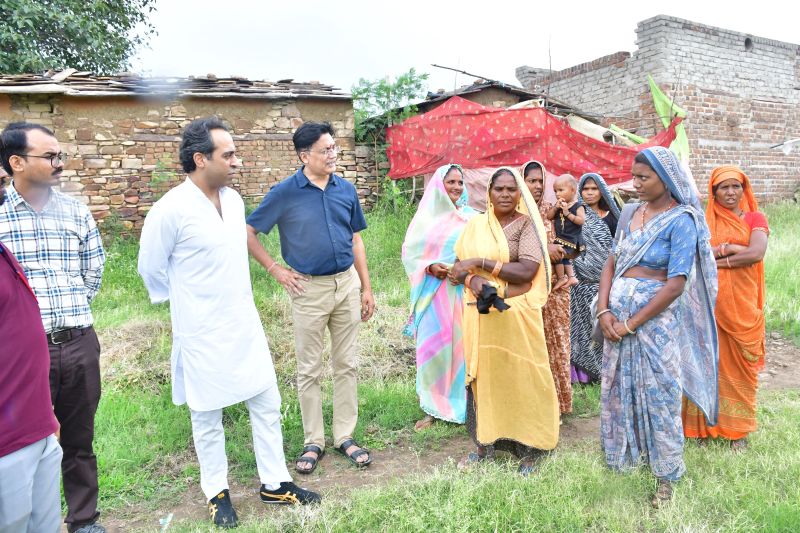
Pune, March 16, 2026: The Watershed Organisation Trust (WOTR) has rejuvenated and constructed 147 traditional water-harvesting structures across Rajasthan, creating a cumulative storage capacity of over 452 million litres of water over the past three years. The initiative has directly benefited more than 1,000 rural households and supported irrigation across 845 acres of farmland in the districts of Karauli, Udaipur, and Dungarpur.
The project focuses on restoring traditional water systems such as Pokhars—stone-reinforced earthen ponds capable of storing up to 1.2 crore litres of rainwater—and Pagaras, cement embankments designed to reduce soil erosion and improve water retention. These low-cost and low-maintenance structures are helping communities address challenges such as erratic rainfall, falling groundwater levels and soil degradation.
The intervention has contributed to visible improvements in agricultural productivity and rural livelihoods. Previously barren land in several villages is now being cultivated with crops such as maize and wheat, allowing farmers to shift away from hazardous occupations such as sandstone mining.
Villages including Mandi Bhat and Shamipur have reported improved water availability for irrigation and drinking purposes. The enhanced water access has also reduced distress migration, supported livestock needs and improved school attendance as families remain in their villages instead of relocating for seasonal work.
Community participation has been a key element of the initiative. WOTR has trained Water User Groups consisting of 10–12 farmers in water budgeting, crop planning and maintenance practices. After construction, the responsibility for maintaining the structures is transferred to local communities, while households manage the Pagaras built on their land.
Dixit Joshi, Technical Officer at WOTR, said, “The flat and gently undulating terrain of these villages in Rajasthan particularly, combined with well-defined river systems, makes Pokhars and Pagaras especially effective. By placing them strategically along natural drainage lines, we are able to intercept rainwater before it flows away, ensuring that every drop is put to productive use. Earlier, villagers had to rebuild mud embankments every year. Now, two to three years of hard labour are saved, allowing them to focus on farming rather than repeated repairs.”
The large-scale rejuvenation initiative has been implemented with the support of corporate social responsibility (CSR) partners working alongside WOTR to strengthen climate resilience in vulnerable rural regions.
Prakash Keskar, Executive Director at WOTR, said, “Reviving traditional water-harvesting systems offers a practical and sustainable pathway to strengthen rural resilience in arid regions like Rajasthan. When communities plan, manage, and maintain their own water resources, it improves water availability and such locally owned solutions ensure that development continues well beyond the duration of any project and supports a more climate-resilient and self-reliant rural economy.”
The initiative highlights the role of traditional water management practices combined with community-led governance in building climate-resilient agriculture and sustainable rural livelihoods.