Sundaram Alternates and the New Architecture of Climate Resilient Urban Growth in India
India’s rapid urban expansion is placing unprecedented pressure on energy systems, natural resources and social infrastructure, making the built environment central to the country’s climate and development story. As cities grow and housing demand accelerates, the role of capital is no longer limited to funding construction but extends to influencing how responsibly and inclusively this growth unfolds. In this context, alternative investment platforms are emerging as critical enablers of sustainable, risk aware urban development.
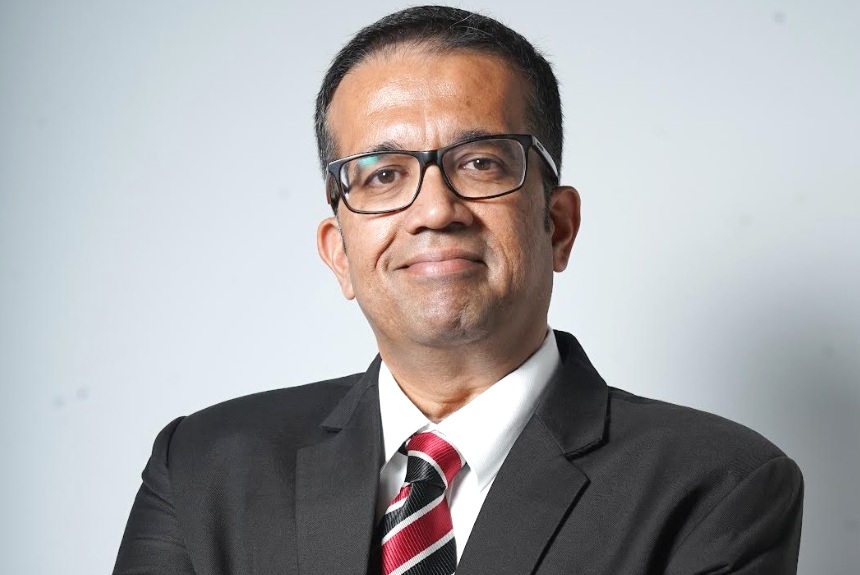
In this interaction with TheCSRUniverse, Mr. Karthik Athreya, Managing Director of Sundaram Alternates, articulates how the organisation is integrating ESG principles directly into private credit and investment strategies to shape better assets and stronger communities. Anchored in the insights from its ESG and Impact Report, the conversation highlights how governance, green design and social safeguards are being used as tools for risk mitigation and long term value creation. It also underscores how responsibly deployed private capital can support India’s climate resilience goals while delivering stable returns and scalable impact across the real estate ecosystem.
Scroll down to read the full interview:
Q. Sundaram Alternates recently unveiled its ESG and Impact Report, signalling a deepened alignment with sustainability. How do you see this launch shaping the organisation’s role as not only a financial institution but also an enabler of meaningful societal change?
A. For us, this report isn’t a marketing document - it’s a statement of responsibility. When you deploy private credit at scale, especially in real estate, you’re shaping how cities grow. The report shows that our capital is already influencing design choices, resource efficiency, and how workers and communities experience development.
If we can direct capital into greener, safer, more inclusive projects - while still delivering strong risk-adjusted returns - we’re not just financing assets, we’re shaping outcomes. That’s the role we want to lean into.
Q. As an institution managing diverse strategies including private credit, corporate credit and thematic equity, how do you balance short-term investor expectations with the need for long-term value creation rooted in responsibility and governance?
A. We’ve always looked at ESG and impact as part of the same equation as financial returns - not as trade-offs. In private credit, strong governance, safer sites, and greener design directly reduce risk, and at the same time generate meaningful social and environmental outcomes.
When you integrate these factors structurally - through covenants, diligence, active monitoring - you automatically protect downside and create long-term value. That balance is the essence of responsible private credit. It delivers stable returns for investors while shaping better assets and stronger communities.
The balance isn’t theoretical - our zero capital-loss track record shows it works.
Q. India’s built environment is emerging as a critical contributor to emissions and resource stress. In this context, what unique role can alternative investments play in ensuring that economic growth does not compromise climate resilience or equity?
A. India’s built environment is extremely resource intensive. Globally, buildings account for nearly 40% of energy use, over a third of material consumption, and about 40% of annual CO₂ emissions. In India, real estate already consumes 40% of national energy, contributes significantly to urban emissions, and will expand rapidly — with 70% of the 2047 building stock yet to be built.
This is exactly where alternative investments can be catalytic.
Banks don’t usually finance design upgrades, green certifications, material transitions, or ESG remediation. Alternative credit can.
We use capital, covenants, and third-party technical expertise to guide developers toward better design, cleaner construction, and resource-efficient operations. This creates a financing ecosystem where social outcomes and financial safeguards reinforce each other - improving resilience while protecting downside.
With the scale of new construction coming, impact-aligned private credit is one of the most powerful tools to ensure India builds low-carbon, water-smart and climate-resilient cities without compromising risk-adjusted returns.
Q. Your recent report highlights measurable social impact, from creating more than 50,000 jobs to positively influencing over 1.3 million people. How does the organisation ensure that these outcomes extend beyond project timelines and translate into sustained community wellbeing?
A. Short-term impact is easy to generate. Sustained impact needsstructure.
We do three things:
1. Institutionalise practices - worker safety, welfare facilities, grievance systems, and timely wage compliance become part of the developer’s operations.
2. Strengthen assets themselves - universal design, safer buildings, better ventilation, and energy/water efficiencies continue benefiting residents for decades.
3. Continuous engagement - our annual ESG reviews, action plans, and monitoring force accountability even after disbursement.
The number - million people positively impacted - matters. But what matters more is that these benefits are built into the asset’s and the project developer's DNA.
Q. The report also references stringent governance standards, including universal ESG due diligence and zero tolerance toward labour rights violations. Could you explain how this oversight is operationalised across locations, especially where compliance frameworks differ?
A. Governance is treated as a core part of our investment process, not as an afterthought.
Every project goes through our proprietary ESG due diligence, third-party audits, and ongoing site monitoring. ESG commitments become legal obligations through covenants in the documentation.
Where compliance maturity is lower, we increase frequency of reviews and handhold developers - training for workers, safety systems, waste management protocols, and statutory tracking (BOCW, labour law, etc.).
Q. The portfolio features nearly 20 million square feet of green-built projects. What challenges do you face when encouraging implementation of globally recognised green design standards, and how does Sundaram Alternates intervene to enable adoption?
A. Three challenges show up consistently:
• Cost perception (“green is expensive”)
• Capability gaps among mid-market developers
• Low awareness about embodied carbon, water stress, and long-term operating savings
Our role is to enable these transitions. The design optimisation, material recommendations and technical inputs come from qualified ESG consultants and internationally recognized certifying bodies.
What we do is make that process commercially viable — by embedding these requirements into covenants, linking milestones to disbursements, and ensuring developers actually engage with the right experts.
The result: nearly 20 million sq. ft. of green-built area already in portfolio, with substantial lifetime energy, water, and carbon savings.
Q. ESG integration spans investment screening, monitoring and exit decisions. Can you recall an instance where ESG evaluation significantly altered an investment trajectory, either preventing exposure or increasing commitment due to positive performance?
A. One example stands out because it directly altered the risk profile of a project we financed in west India.
During diligence on a mid-income residential project, we uncovered material ESG gaps - unsafe practices in labour camps, missing safety infrastructure, incomplete statutory registers, and poor waste controls. These are not soft issues; they translate into real credit risk through potential injuries, site shutdowns, or compliance-related delays.
Instead of walking away, we used covenants to drive a structured turnaround. The developer brought in certified HSE trainers, shifted the labour camp to LPG, installed emergency stations, formalised regulatory tracking, and pursued EDGE certification with support from independent experts.
Within two quarters, the project moved from a high-risk profile to a compliant, resource-efficient asset with stronger governance. In pure credit terms, we converted a potentially volatile investment into a more resilient one.
Without ESG evaluation, this would have been a borderline approval; with ESG integration, it became a de-risked, value-accretive asset.
Q. Sustainable private credit demands clarity and transparency to investors. How is Sundaram Alternates helping investors interpret ESG metrics as indicators of long-term financial strength rather than administrative disclosures?
A. We focus on financial relevance, not box ticking, by tracking KPIs that are not only verified but have tangible outcomes.
• Resource (energy/water) savings → improve affordability,lower default and vacancy risks.
• Embodied carbon savings → better material efficiency, lower lifecycle costs, and reduce exposure to future carbon-pricing or regulatory shifts.
• Strong governance reduces legal, execution and timeline risk.
• Better safety and welfare → fewer site disruptions.
• Green certifications → higher saleability and liquidity.
So, to our investors, we not only provide the additionality of being climate conscious but also ensure that ESG reduces the portfolio volatility and protects downside - especially in private credit - they stop viewing it as CSR and start viewing it as credit enhancement. Our track record of zero capital loss till date, reinforces this point.
Q. With more than half of your residential portfolio designed for universal accessibility, how do you embed inclusive design as a business advantage rather than a compliance requirement, especially when addressing tenant needs across diverse regions?
A. Universal accessibility makes assets usable by more people - elderly, young families, persons with disabilities. That widens the buyer base.
More than half our portfolio is already designed with accessibility features. Developers see that these design choices improve customer satisfaction. Once it becomes a commercial advantage, it no longer feels like compliance - it becomes good business.
Q. Looking ahead, what early signals from your current portfolio suggest that responsibly deployed private credit can accelerate equitable urban development at scale, particularly in underserved markets where capital gaps are structural rather than cyclical?
A. Three clear signals are already visible in our portfolio:
1. Green supply is scaling in mid-market housing, not just premium - showing that climate resilience can be democratised.
2. ESG-linked capital plays a critical role in underserved markets because it directly addresses gaps in safety, compliance, and resource efficiency that are more acute in these regions while driving outcomes that drive India's net-zero commitments.
3. Developers are adopting ESG practices voluntarilyonce they experience efficiency gains - across all their projects - this is the real inflection point.
India’s next phase of urbanisation will be shaped by private capital that is disciplined, forward-looking, and impact aware. The early data from our portfolio tells us this approach can scale meaningfully.





.png)