
Study Finds Disability Sector Receives Only 1% of CSR Funding in India
New Delhi, May 20, 2026: Pacta and Able Together have released The Landscape of Funding for Disability in India, described as the country’s first systematic study examining structural barriers affecting disability funding across the social sector.
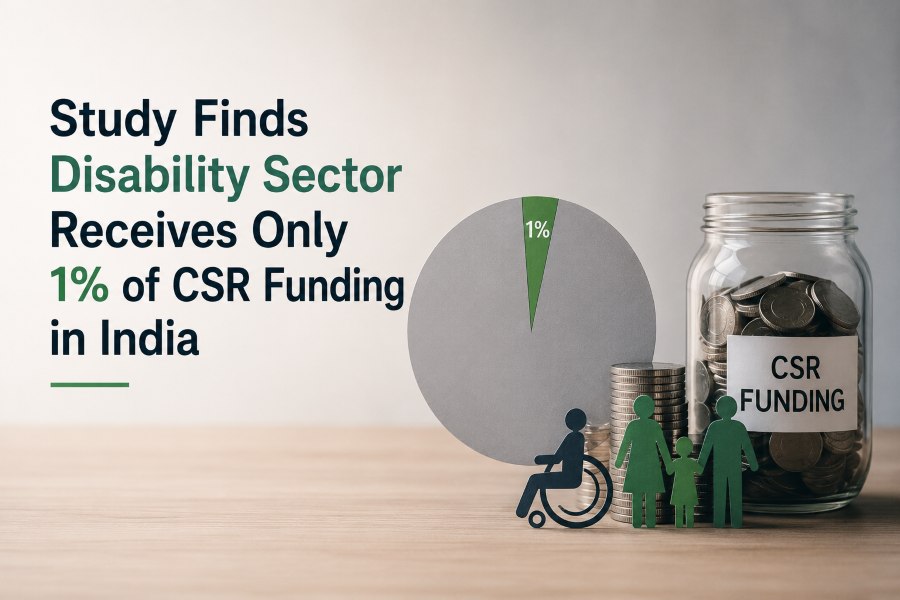
The report states that despite nearly 10% of India’s registered non-profits working in the disability sector, it receives only around 1% of Corporate Social Responsibility (CSR) funding. Combined Union and State allocations for disability-related programmes were estimated at approximately 0.04% of GDP.
Commissioned by Able Together and led by Pacta, the study surveyed 52 disability-focused non-profit organisations across India to understand the challenges affecting sustainability and long-term growth in the sector.
According to the report, the disability ecosystem is trapped in what it terms a “low-funding equilibrium”, where low public investment, weak philanthropic support and limited organisational capacity reinforce each other and restrict sectoral growth.
The report identified three key structural issues contributing to the funding gap: low public investment signalling limited priority to private funders, hesitation among funders due to weak state commitment, and under-resourced organisations struggling to demonstrate impact and meet donor expectations.
Among the findings, 50 out of 52 surveyed organisations reported challenges in demonstrating impact to funders, nearly half said they lacked dedicated fundraising staff, and 25 organisations identified short-term funding cycles as a major obstacle. The study also noted that disability-focused interventions often cost two to three times more per beneficiary compared to similar social sector programmes.
Nivedita Krishna said, “For years, disability has remained visible in policy language but invisible in funding flows. This report is an attempt to show that underfunding is not incidental, it is structural. Unless we address that, inclusion will continue to remain uneven and fragile.”
The report further highlighted the need to move beyond viewing disability as a welfare issue and instead integrate it into broader development priorities such as education, healthcare, livelihoods, mental health, ageing and public infrastructure.
Sudhir Shenoy said, “The disability sector does not lack committed organisations. What it lacks is the connective tissue trust, visibility, networks, and long-term capital that allows good work to grow sustainably. We hope this report helps bring funders and disability organisations into a more honest and collaborative conversation.”
The report also outlined ten recommendations aimed at strengthening disability funding ecosystems, including expanding multi-year funding models, improving connections between funders and disability organisations, mainstreaming disability across development programmes and enforcing provisions under the Rights of Persons with Disabilities (RPwD) Act.