Reimagining Disability Inclusion: Prateek Madhav on Building India’s Assistive Technology Ecosystem
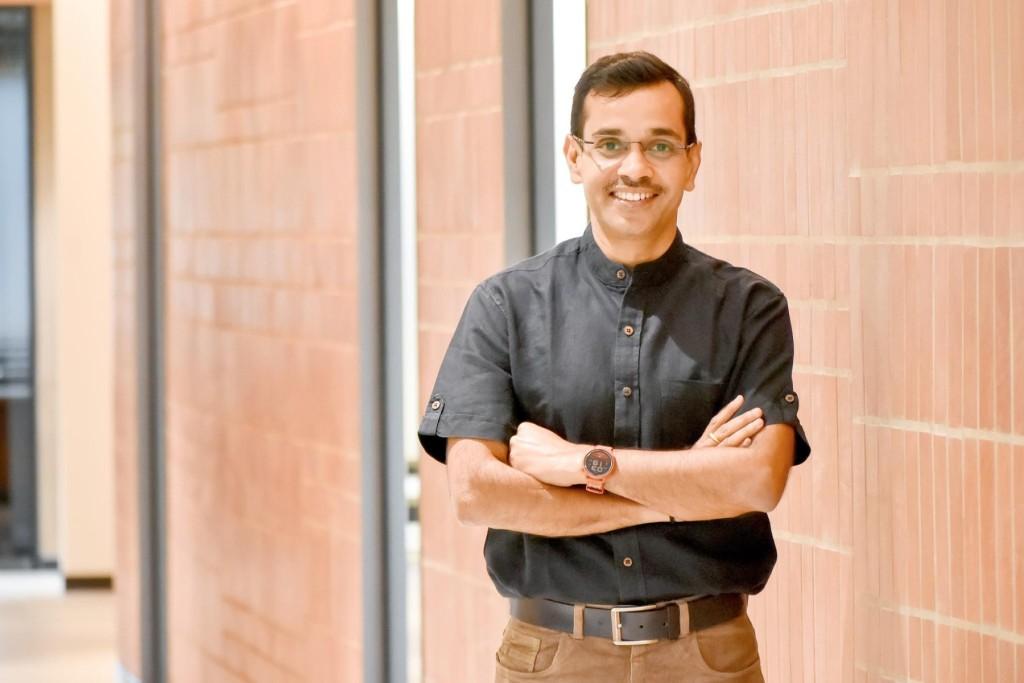
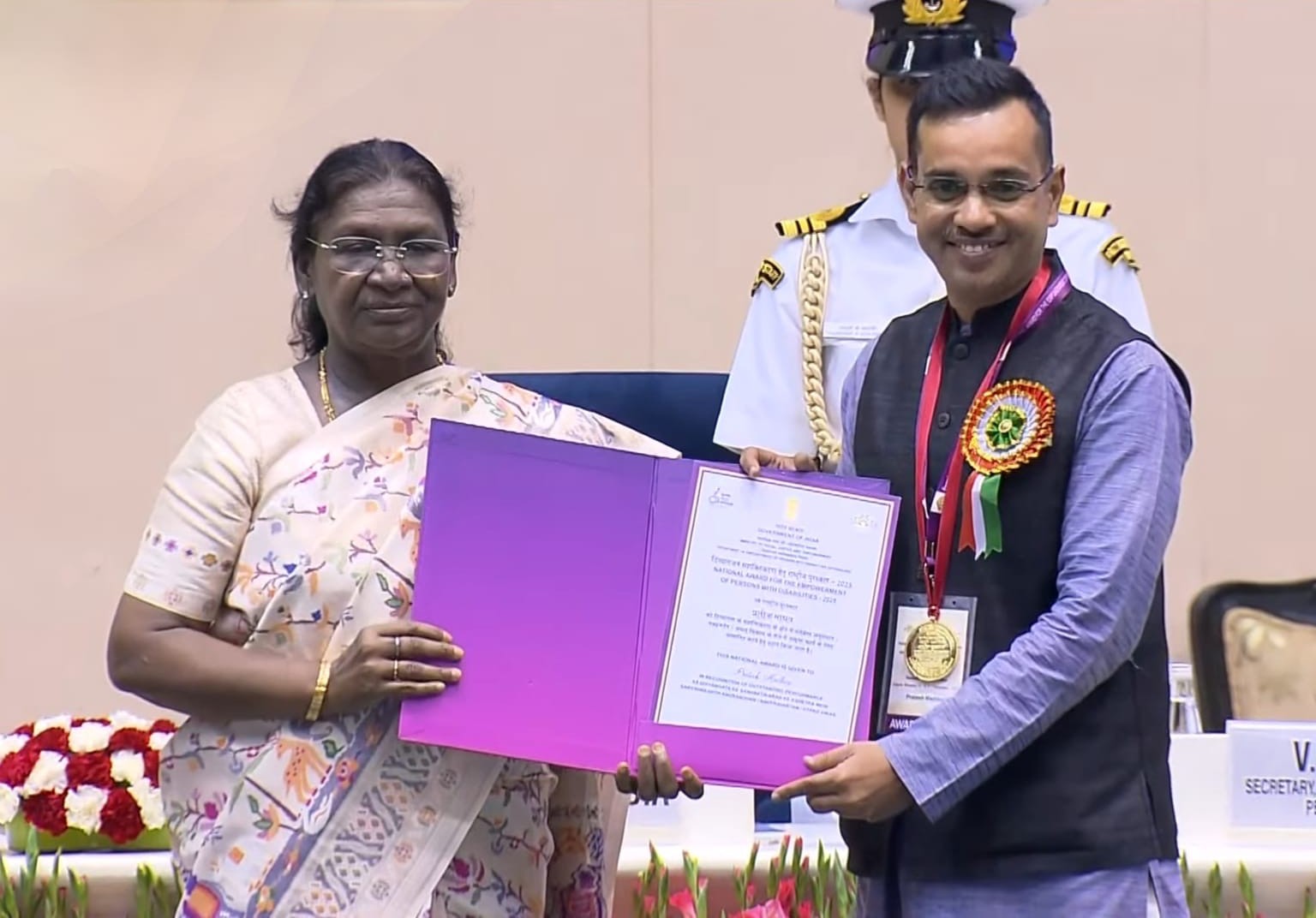
As India accelerates toward a technology-driven future, the question of inclusion has never been more critical. Assistive Technology (AT) is emerging as a powerful enabler—bridging gaps in education, employment, and independent living for Persons with Disabilities (PwDs). At the heart of this movement is Prateek Madhav, Co-Founder & CEO of AssisTech Foundation (ATF), whose work has helped shape India’s evolving AT ecosystem. His recent National Award from the Hon’ble President of India marks a significant milestone not just personally, but for the broader disability inclusion movement.
 In this exclusive interview with TheCSRUniverse, Prateek Madhav reflects on the lived experiences that led him from a corporate technology career to building ATF as a pan-India ecosystem enabler. He discusses the foundational gaps in India’s AT landscape, the role of policy and innovation in scaling impact, and how ATF’s 3Ls framework—Learning, Livelihood, and Living—is enabling holistic empowerment for PwDs. The conversation also highlights breakthrough AT startups, the role of corporates and CSR in driving adoption, and India’s potential to emerge as a global hub for inclusive, affordable Assistive Technology.
Read the full interview for deeper insights:
Q. Congratulations on receiving the National Award from the President of India! What does this recognition mean to you personally and for the Assistive Technology movement in India?
A. Receiving the National Award from the Hon’ble President of India is deeply humbling for me. On a personal level, it represents close to fifteen years of sustained effort, often behind the scenes, working across multiple disability-focused organisations while simultaneously navigating a demanding corporate career. It is a moment of reflection as much as recognition, reaffirming a belief I have carried for a long time: that technology, when designed with empathy and intent, can fundamentally shift lives.
Beyond the personal milestone, I see this award as an affirmation of the larger Assistive Technology (AT) movement in India. Over the years, we have moved from viewing disability through a lens of welfare to recognising it as an innovation and inclusion opportunity. This recognition validates the collective work of entrepreneurs, persons with disabilities, researchers, policymakers, and institutions who are building an ecosystem rather than isolated solutions.
Importantly, it also signals India’s growing potential to emerge as a global hub for AT by combining scale, affordability, deep-tech capability, and social impact. If this recognition helps draw greater attention, investment, and policy focus to AT, then its true value lies not in the award itself, but in what it enables for the future of inclusive innovation in the country.
Q. What were the inflection points or lived experiences that shaped your journey toward establishing ATF?
A. My journey toward establishing AssisTech Foundation was shaped less by a single defining moment and more by a series of experiences that steadily changed my worldview. While I was still in the corporate technology ecosystem, I actively sought volunteering opportunities that connected me to the disability sector. One early inflection point was being part of the organising team for the first T20 Cricket World Cup for the Blind. That experience challenged many of my assumptions—it introduced me to a community that was vibrant, competitive, ambitious, and deeply aspirational, yet consistently constrained by systemic barriers rather than ability.
The turning point came when I chose to step into a full-time leadership role as the CEO of a non-profit organisation working with persons with disabilities. That role took me across rural and semi-urban India, where I witnessed the stark infrastructure and digital divides firsthand. At a time when the rest of the country was rapidly benefiting from digital transformation, large sections of the disability community were being left out—not because technology did not exist, but because access and design were not inclusive.
Those experiences made it clear to me that incremental efforts were not enough. What was needed was a dedicated, innovation-led ecosystem that could bridge these gaps at scale. That realisation ultimately led me to commit fully to Assistive Technology—both as a field and as a life’s work—with the belief that access, dignity, and opportunity for persons with disabilities must be built into the core of our technological progress, not treated as an afterthought.
Q. What were the foundational gaps you identified in India’s AT landscape when ATF started, and how did you strategically address them?
A. When ATF started, the biggest gap in India’s AT landscape was not a lack of ideas, but the absence of a cohesive policy and innovation framework to help those ideas scale. AT startups sat between welfare and entrepreneurship, without clear policy ownership, market pathways, or long-term support.
We addressed this by working directly at the policy–innovation intersection—contributing to the National Strategic Framework for Assistive Technology with NITI Aayog, engaging globally through The Royal Society on digital AT policy, and supporting state governments such as Tamil Nadu to integrate AT startups into mainstream innovation and startup policies.
This remains a work in progress. But the focus has been clear: create an enabling policy environment where AT innovation can move from pilots to scale, and position India as a credible global hub for inclusive, affordable AT solutions.
Q. Could you share two or three breakthrough innovations or startups from the ATF portfolio that truly demonstrate how AT can transform Learning, Livelihood, and Living for PwDs?
A. There are several startups from the ATF portfolio that clearly demonstrate how Assistive Technology can move beyond access and fundamentally transform 3Ls for persons with disabilities.
One strong example is Trestle Labs, which has redefined access to written content for persons with visual impairments and print disabilities through their product Kibo. Using AI-driven OCR, language processing, and accessible formats, Trestle Labs enables learners to independently access textbooks, academic material, and professional content. What is particularly powerful is how this transition from accessible learning directly translates into improved employability as when individuals can study, upskill, and compete on equal terms, livelihood outcomes follow naturally.
DeepVision Tech addresses a critical communication barrier for persons with hearing and speech impairments. Their AI-powered, device-agnostic platform enables real-time, two-way communication using only a mobile phone, allowing individuals who use sign language to communicate seamlessly with those who do not know sign language. By removing the need for specialised hardware or intermediaries, the solution expands access across education, workplaces, and public services, directly supporting inclusion in both learning and livelihood contexts.
Another important example is Marbles Health, which brings a critical mental health lens to the Assistive Technology ecosystem. Persons with disabilities are at a higher risk of experiencing anxiety, depression, and emotional isolation, yet mental health services are often inaccessible or inadequately designed for them. Marbles Health leverages technology to deliver more inclusive, personalised, and accessible mental health support, helping individuals address emotional well-being alongside physical or sensory needs.
Together, these innovations reflect what we aim to build at ATF: solutions that are not siloed, but holistically improve how persons with disabilities learn, work, and live, using technology as an enabler of agency, not dependency.
Q. How can Assistive Technology increase employment opportunities for Persons with Disabilities by up to 40%? What enablers—policy, corporate inclusion, or technology—are most critical?
A. Assistive Technology can increase employment opportunities because it removes functional and environmental barriers that limit access to work, rather than attempting to “fit” individuals into inaccessible roles. When the right technology is paired with inclusive job design, entirely new employment pathways open up.
A clear example is NeoMotion. When they came to ATF, they were at the product development stage, focused on reimagining mobility solutions. With ecosystem support and linkages, their innovations translated directly into employment outcomes. Today, partnerships such as NeoMotion’s collaboration with Zomato show how assistive mobility devices can enable persons with disabilities to take up delivery and field roles, jobs previously considered out of reach.
This demonstrates that scale happens at the intersection of technology that works, corporates willing to redesign roles, and enabling policy ecosystems. When these align, AT moves from accommodation to opportunity.
Q. Could you share a success story of a startup or AT product that created significant impact for PwDs—particularly in Tier 2 or Tier 3 India?
A. One impactful example from Tier 2 and Tier 3 India is the deployment of Kibo, an AI-powered reading and learning solution developed by Trestle Labs. Through a collaboration between ATF, HDFC, and Trestle Labs, Kibo was introduced in rural libraries across Karnataka, with a specific focus on children with visual impairments. For many of these children, this was their first opportunity to independently access books and learning material in formats designed for them.
The impact was immediate and tangible. Children who had been dependent on others for reading were able to engage with content on their own, improving both learning outcomes and confidence. Based on the success of this pilot, the Rural Development and Panchayat Raj Department (RDPR), Government of Karnataka, supported the scale-up of Kibo to an additional 35 rural libraries across the state. The initiative reached over 2,500 beneficiaries, demonstrating how AT when embedded into public infrastructure, can drive meaningful and scalable inclusion beyond metropolitan India.
Q. ATF follows the ‘3Ls’ framework—Learning, Livelihood, and Living. How has this approach enabled holistic empowerment for PwDs at scale?
A. The 3Ls framework: Learning, Livelihood, and Living has helped ATF to structure a systems-level approach to empowerment. From the outset, we recognised that meaningful inclusion cannot be achieved by addressing only one aspect of a person’s life. Education without employment, or employment without independent living, limits long-term impact. The 3Ls allow us to design solutions that support the full life cycle of participation and dignity.
At scale, this has translated into building a network of 500+ Assistive Technology startups, mapped deliberately across Learning, Livelihood, and Living use cases. To operationalise this at an ecosystem level, we work through our 4A framework—Acceleration, Availability, Awareness, and Association. Under Acceleration, we support innovation and entrepreneurship through initiatives such as cATalyst, the UNDP Youth Co:Lab partnership, and the collaboration with DPIIT for the SISFS AT Fund. Availability focuses on ensuring AT reaches end users through platforms like ATF Adidvara and market-access programs such as illuminATe. Awareness initiatives including AThlete Unleashed, SensATe experience centres, ATF Awards, and CoAT roundtables, help shift mindsets and mainstream inclusion. Association brings together government, corporates, nonprofits, investors, and startups to drive alignment and scale.
Together, the 3Ls and 4As create a connected, reinforcing ecosystem—one that enables Assistive Technology to move from innovation to adoption, and from individual benefit to population-level impact for persons with disabilities.
Q. What opportunities do you see for corporates, CSR leaders, and foundations in India to meaningfully support AT entrepreneurs and PwD inclusion at scale?
A. Corporates, and CSR leaders have a powerful opportunity to move beyond fragmented support and play a catalytic role in scaling AT and inclusion in India. One of the most meaningful interventions is backing market-access programs such as illuminATe, which help AT entrepreneurs move from pilots to real-world adoption. CSR support in this area enables startups to reach users, validate solutions in live environments, and build sustainable business models, often the most difficult phase of the innovation journey.
Equally important is inclusive employment. Corporates can expand impact by rethinking hiring practices and job design, and by actively partnering with platforms like Adidvara, which connects skilled persons with disabilities to inclusive employers using structured, tech-enabled matching. When corporates combine CSR-led ecosystem support with intentional inclusive hiring, they help shift AT from being a niche intervention to a mainstream driver of workforce participation and economic inclusion at scale.
Q. How do you envision India positioning itself as a global hub for Assistive Technology under this upcoming national framework?
A. India is at a pivotal moment in its journey to become a global hub for Assistive Technology, and I am glad to be part of this transition through the policy work led by NITI Aayog. The emerging National Strategic Framework for Assistive Technology, anchored around the four Ps—Products, Provision, Personnel, and Policy—creates the foundation to move AT from niche adoption to mainstream accessibility and enable persons with disabilities to make independent choices at scale.
Beyond policy, India’s strength lies in its fast-growing AT startup ecosystem, which is building affordable, user-centric, and contextually relevant solutions with global applicability. With the right mix of dedicated capital, AI-led innovation, and structured incubation, these startups can scale rapidly. Equally critical is market access through digital AT marketplaces, public procurement platforms like GeM, and last-mile distribution—so innovation translates into real-world impact.
If this is complemented by accessible infrastructure, universal design, strong manufacturing, and data-driven AT research, India can emerge not just as a large AT market, but as a global leader shaping the future of inclusive technology.
Q. What are the biggest challenges AT startups still face—be it funding, adoption, skilling, or awareness—and how can the ecosystem address them?
A. The biggest challenges AT startups continue to face are access to patient capital and limited awareness, both within markets and among investors. While the innovation potential is strong, AT startups typically operate on longer gestation cycles, making them less attractive to short-horizon funding models.
What the ecosystem needs is a decisive shift toward impact-aligned capital that recognises both social and economic value. Evidence already exists as studies such as the ATscale report indicate that AT can deliver up to a 1:9 return, combining commercial viability with large-scale social impact. Yet, despite this promise, the sector remains significantly undercapitalised. As a step toward addressing this, we launched India’s first exclusive AT Fund under the Startup India Seed Fund Scheme (DPIIT)—an early but important signal to the market.
Equally critical is awareness and adoption. Many high-quality AT innovations fail to scale simply because users, institutions, employers, and procurement systems are unaware they exist. ATF addresses this gap through initiatives such as the ATF Awards, sensATe experience centres, and sustained ecosystem engagement. Our work spans six key stakeholder groups: government, corporates, investors, institutions, startups, and the disability community, bringing them together through a structured partnership model. When capital, awareness, and multi-stakeholder collaboration move in sync, AT startups can scale sustainably and reach the people they are meant to serve.
Q. As ATF continues to grow, what is your long-term vision for India’s disability inclusion movement? What does success look like for you 10 years from now?
A. My long-term vision is for India’s disability inclusion movement to be driven not by charity or compliance, but by innovation, access, and equal opportunity. Over the next decade, I see ATF continuing to build a deep, technology-led ecosystem, growing beyond today’s 500+ startups and increasingly shaped by advances in Artificial Intelligence that personalise, scale, and mainstream AT across sectors.
Equally important is the policy foundation we are helping shape. The work underway with institutions such as NITI Aayog and in partnership with the Ministry of Social Justice and Empowerment is aimed at ensuring that innovation translates into availability—so AT is not just developed or scaled, but reaches persons with disabilities as a matter of right and choice.
For me, success ten years from now is when persons with disabilities have equal access to education, employment, and everyday life across the country, and are recognised as active contributors to India’s economic growth. When inclusive systems enable this participation at scale, the disability ecosystem can unlock an estimated 5–7% contribution to GDP, not as a statistic, but as a reflection of dignity, agency, and shared national progress.




.png)