
India’s Water Quality Challenge in 2025–26: What the Data Shows, Where the Risks Persist, and Why CSR Must Shift Gears
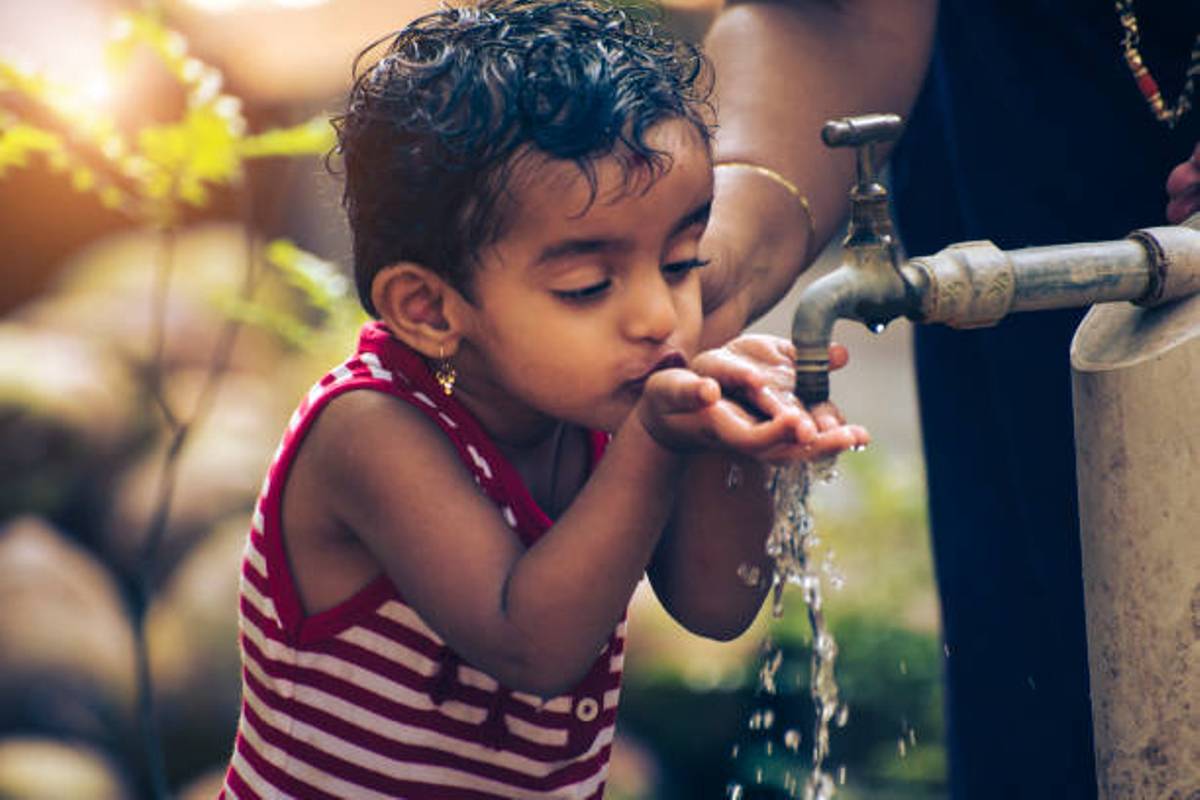
Water quality has emerged as one of India’s most consequential development challenges in 2025–26, sitting at the intersection of public health, environmental sustainability, climate resilience and corporate responsibility. While access to drinking water has expanded rapidly over the past five years, evidence from international benchmarks, national monitoring agencies and recent contamination episodes suggests that water safety and quality remain uneven and fragile. The data increasingly indicates that India’s water challenge today is less about infrastructure expansion alone, and more about contamination control, monitoring and long-term system resilience.
India’s Global Standing on Drinking Water Safety
There is no single, officially released “Global Water Quality Index” for 2025 or 2026. However, widely used international benchmarks consistently place India in the lower tier globally on indicators related to drinking water safety and exposure to unsafe water.
In the Environmental Performance Index (EPI) 2024, developed by Yale University in collaboration with Columbia University, India ranked 116 out of 180 countries on the specific indicator measuring exposure to unsafe drinking water. This indicator is based on estimates of disease burden attributable to unsafe water drawn from WHO Global Health Estimates, and does not measure physical access to water infrastructure or service coverage. As such, it is commonly used as a proxy for health risk linked to water quality rather than infrastructure expansion alone.
Parallel evidence comes from the WHO–UNICEF Joint Monitoring Programme (JMP). Its latest consolidated updates indicate that while over 90% of India’s population has access to a basic drinking water source, only around 55–60% have access to “safely managed” drinking water; defined as water that is available on premises, accessible when needed, and free from contamination. In comparison, most Western European countries report near-universal safely managed drinking water coverage.
Together, these comparisons underline a critical distinction: India’s water challenge has largely moved beyond access and into the domain of sustained quality assurance.
What National Monitoring Data Reveals
Domestic monitoring data reinforces this concern. The Central Pollution Control Board (CPCB), under its National Water Quality Monitoring Programme, has consistently reported that a significant share; roughly one-third of monitored river stretches across India fail to meet designated best-use criteria. High faecal coliform levels, elevated biochemical oxygen demand (BOD), and chemical pollution from untreated sewage and industrial discharge remain the dominant causes.
Groundwater quality presents an even more complex challenge. Assessments by the Central Ground Water Board (CGWB) indicate that a majority of India’s districts are affected by groundwater contamination by at least one parameter. Common contaminants include fluoride, arsenic, nitrate, salinity, iron and heavy metals. Various national assessments suggest that over 200 million people are exposed to groundwater with chemical concentrations exceeding permissible limits. Across monitoring cycles, an estimated 20–30% of tested groundwater samples nationally exceed one or more safety parameters, with contamination hotspots in states such as Madhya Pradesh, Rajasthan, Uttar Pradesh, West Bengal and parts of southern India.
Recent Contamination Episodes: Systemic Vulnerabilities Exposed
These structural weaknesses have translated into recurring contamination incidents across states and cities, underscoring the fragility of water quality governance.
In late 2025, parts of Indore in Madhya Pradesh, particularly the Bhagirathpura area, witnessed a severe drinking water contamination crisis after sewage reportedly entered the municipal water supply. According to multiple credible media reports citing district administration, health department officials and municipal authorities, the outbreak led to at least seven officially acknowledged deaths, while local residents and opposition representatives claimed the toll was higher, with some reports citing up to 13–16 fatalities. Media reports further indicated that over 1,400–1,500 residents fell ill with acute diarrhoeal and gastroenteritis symptoms, with hundreds requiring hospitalisation. Municipal and state health officials confirmed that bacteriological contamination of drinking water was a key factor behind the outbreak. The incident drew national attention as it occurred in a city frequently ranked among India’s cleanest, highlighting how sanitation rankings do not necessarily reflect the safety of drinking water distribution systems (reported by The New Indian Express, NDTV and The Times of India).
Gujarat continues to face persistent water quality challenges despite relatively strong infrastructure indicators. Integrated Disease Surveillance Programme (IDSP) data over recent years points to repeated outbreaks of acute diarrhoeal diseases across urban and rural areas, along with periodic cholera cases reported by state health authorities. CGWB assessments further indicate that a large majority of districts in Gujarat are affected by salinity, fluoride or nitrate contamination, particularly in arid, semi-arid and coastal regions.
In the National Capital Territory of Delhi, CGWB monitoring has detected uranium concentrations above permissible limits in a subset of sampled groundwater locations, alongside elevated nitrate and heavy metal levels in several urban and peri-urban zones. While contamination is often localised, public health experts warn of cumulative risks for populations dependent on untreated borewell water.
Taken together, these cases illustrate that water quality risks are no longer confined to rural or remote regions. Urban density, ageing infrastructure, groundwater over-extraction and climate variability are amplifying contamination risks across geographies.
Public Health Impact: Progress with a Persistent Burden
Unsafe water continues to impose a significant public health burden. Ministry of Health and Family Welfare (MoHFW) and national disease surveillance data indicate that India reports over 30 million cases of waterborne diseases annually, including acute diarrhoeal diseases, typhoid and cholera. WHO estimates suggest that unsafe water, sanitation and hygiene contribute to nearly 300,000 deaths each year in India, disproportionately affecting children under five and other vulnerable populations.
At the same time, there is evidence of improvement. Government health data suggests that states achieving higher coverage of piped, treated water have recorded substantial declines in acute diarrhoeal disease incidence between 2019 and 2024, in some cases exceeding 50%. These trends demonstrate that infrastructure expansion can yield significant health gains when water quality is consistently maintained.
Government Spending and Programme Outcomes
India’s flagship response to the drinking water challenge has been the Jal Jeevan Mission (JJM), launched in 2019 by the Ministry of Jal Shakti, with an approved outlay of approximately ₹3.6 lakh crore shared between the Centre and states.
Union Budget documents show that central government allocations for drinking water and sanitation rose sharply from around ₹20,000 crore in FY2020 to over ₹70,000 crore by FY2025–26, reflecting a multi-fold increase in public investment in the sector. Official dashboards indicate that rural household tap water coverage has increased from around 17% in 2019 to over 75% by 2025, reaching more than 145 million households.
JJM has also supported the establishment of over 2,000 water quality testing laboratories nationwide and the training of village-level workers to conduct field tests. However, audit findings and parliamentary disclosures indicate that testing frequency, data transparency and follow-up corrective action remain uneven, particularly in smaller habitations. A significant share of villages with tap connections reportedly do not yet receive regular or adequate water supply, raising questions about service sustainability.
CSR Spending on Water: Scale, Role and Gaps
Corporate Social Responsibility has emerged as an important supplementary contributor to water interventions. Ministry of Corporate Affairs data shows that Indian companies collectively spend between ₹7,000 and ₹10,000 crore annually on water, sanitation and environmental sustainability, accounting for roughly 10–12% of total CSR expenditure in recent years.
CSR initiatives typically include community water purification systems, rainwater harvesting, watershed development, lake rejuvenation and school-level WASH programmes. While many projects report positive local outcomes, available evidence suggests that a large share of CSR interventions remain site-specific and output-focused. Publicly disclosed data on long-term water quality improvement, disease reduction or integration with municipal water and wastewater systems remains limited.
Impact assessments often prioritise infrastructure outputs and beneficiary numbers rather than sustained improvements in water safety or public health outcomes, making long-term effectiveness difficult to evaluate.
The Emerging CSR Imperative
As public investment increasingly focuses on expanding access, experts argue that CSR must pivot towards quality assurance and system resilience. Priority areas include real-time water quality monitoring, strengthening accredited testing infrastructure, wastewater treatment and reuse, industrial effluent control, and transparent data sharing with urban local bodies.
Water quality is also a material business risk. The World Economic Forum’s Global Risks Reports have consistently ranked water crises among the top global risks in terms of potential impact, with implications for supply chains, workforce health and community stability. For corporates, strategic engagement on water quality aligns CSR more closely with ESG risk management rather than standalone philanthropy.
A Balanced Assessment
India’s water quality landscape in 2025–26 reflects both unprecedented public investment and persistent structural vulnerabilities. Across multiple international benchmarks, India continues to rank in the lower tier on drinking water safety indicators, while domestic monitoring data and recent contamination episodes in states such as Madhya Pradesh and Gujarat, as well as major urban centres, point to ongoing gaps in monitoring and governance.
Whether India can translate rapid infrastructure expansion into lasting water security will depend on how effectively government, industry and CSR stakeholders address contamination prevention, accountability and long-term system performance. As climate stress and urban demand intensify, ensuring safe water will remain central to India’s public health outcomes and sustainable development trajectory.
Sources
(Environmental Performance Index 2024; WHO–UNICEF Joint Monitoring Programme; Central Pollution Control Board; Central Ground Water Board; Ministry of Health and Family Welfare; Integrated Disease Surveillance Programme; Ministry of Jal Shakti; Union Budget documents; Ministry of Corporate Affairs; World Economic Forum; The New Indian Express; NDTV; The Times of India)








.png)