From Water Stress to Water Security: How Corporate–NGO Collaboration is Recharging Urban India
As Indian cities grapple with intensifying water stress, the need for scalable, science-backed, and community-driven solutions has never been more urgent. In this insightful conversation with TheCSRUniverse, Ms. Deepa Nagraj, Global Head – Communications, ESG & CSR, Mphasis, and Mr. Rajesh Krishnan, CEO, United Way Bengaluru, unpack how collaborative action is shaping a more water-secure urban future.
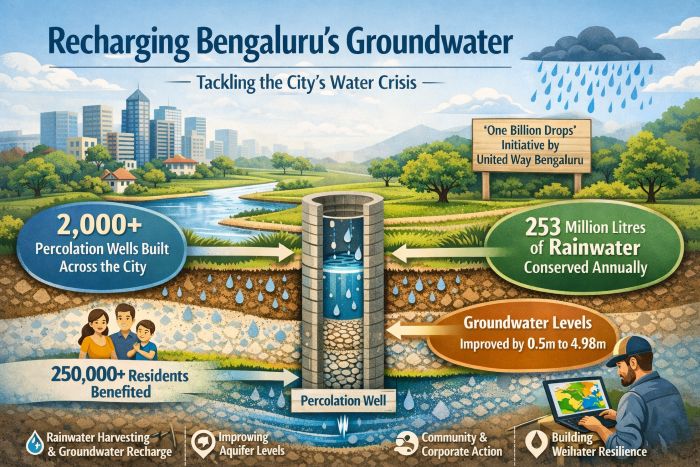
The discussion explores Bengaluru’s growing groundwater crisis, driven by rapid urbanisation, declining water bodies, and inadequate recharge systems, alongside the transformative potential of initiatives like ‘One Billion Drops’. Through decentralised rainwater harvesting, percolation wells, and lake rejuvenation efforts, the partnership highlights how data-driven planning, community engagement, and corporate responsibility can converge to deliver measurable environmental impact.
The interview also delves into how water stewardship is being embedded into ESG strategies, the role of technology and scientific validation in scaling interventions, and why behavioural change is critical to long-term sustainability. Offering both strategic insights and on-ground perspectives, this conversation presents a compelling blueprint for cities, corporates, and communities working together to turn water challenges into opportunities for resilience and regeneration.
Read the full interview below.
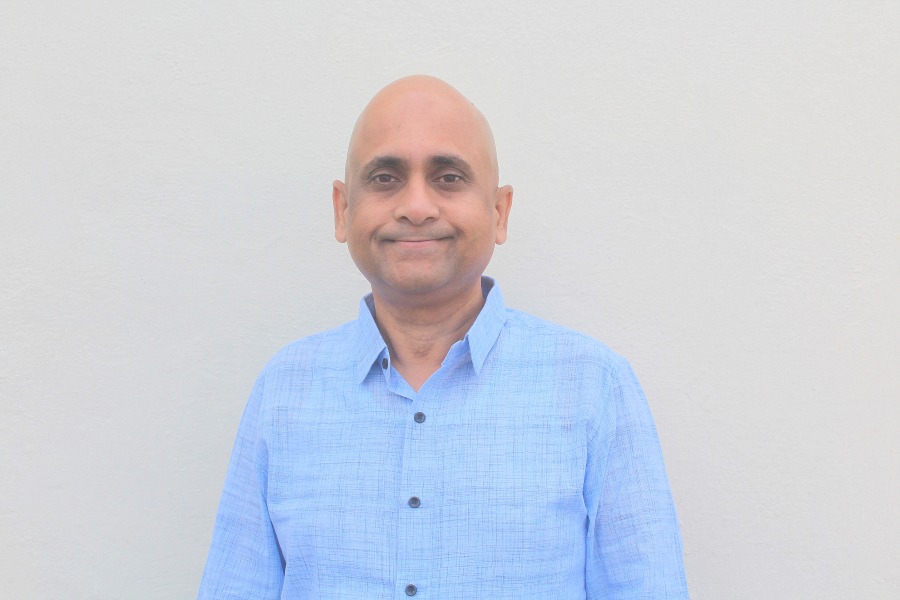
Mr. Rajesh Krishnan, CEO, United Way Bengaluru
Q. With several wards in Bengaluru facing acute groundwater stress, what are the most pressing gaps in urban water management today?
A. This seems to be a question that arises almost every summer. Bengaluru, by virtue of its geography, is located on a plateau with no large natural water body nearby. Unlike cities such as Chennai, Mumbai, or Kolkata, we do not have the advantage of proximity to the sea. Therefore, from time immemorial, our ancestors mastered the art of conserving rainwater. The lakes in our city are, in fact, an engineering marvel. They are essentially tanks designed with the objective of capturing, conserving, and allowing rainwater to percolate into the ground. Like many rapidly growing metropolitan cities, Bengaluru is facing the challenges that accompany its own expansion. Nearly 93% of the city is now concretized, several tanks have gradually been filled or altered to accommodate growing population needs, and in some cases waste disposal systems have also affected these water bodies. In many ways, we have gradually moved away from the practices followed by earlier generations.
 Another consequence of rapid urban development is our growing dependence on water from the Cauvery River, which is transported from nearly 160 km away to Bengaluru. With the city’s expanding population, meeting basic needs such as water has become increasingly complex, placing additional pressure on available water resources, particularly groundwater.
Groundwater extraction in itself is not necessarily a concern if adequate structures exist to replenish aquifers. Unfortunately, Bengaluru currently does not have sufficient recharge systems in proportion to the level of extraction. Surface water storage and groundwater recharge must function together and deserve equal attention. In the case of Bengaluru, many water bodies that once stored rainwater and functioned as large percolation tanks have reduced significantly due to the city’s expansion. Despite receiving above-average rainfall in most years over the past two decades, the amount of rainwater captured, stored, or allowed to percolate remains limited. A considerable portion of rainfall is lost as runoff, estimated to be nearly 40%. This is one of the reasons why a city like Bengaluru continues to face water stress almost every year, especially when the pace of addressing these challenges remains gradual.
Q. What inspired the ‘One Billion Drops’ initiative, and why were percolation wells identified as a scalable solution for groundwater recharge?
A. Rainfall is one of the most valuable resources that nature has given us. Bengaluru is one of those cities where one can experience extremes when it comes to the water situation. During the monsoon, heavy rains often result in waterlogging on major streets due to limited rainwater capture infrastructure and challenges in stormwater drainage. On the other hand, water tankers often become an essential source of supply during the summer months. The guiding philosophy of United Way Bengaluru as an organization is to identify the most pressing needs of a community, develop viable solutions, and align them with the resources available.
It is this approach that led to the launch of the One Billion Drops Campaign which focuses on capturing rainwater where it falls and when it falls, and enabling it to percolate underground to replenish shallow aquifers. Given the amount of rainfall that the city receives, Bengaluru could potentially have been far more water secure if rainwater had been effectively conserved and allowed to percolate into the ground. The concept of percolation wells is not new to India; however, we introduced certain design refinements and developed an implementation approach suited to the urban landscape of Bengaluru.
We had similarly introduced a second initiative in partnership with Mphasis. Named ‘Wake the Lake’, it focuses on restoring and strengthening urban water bodies to enhance surface water storage.
Q.Could you briefly explain how locations for percolation wells are identified and how scientific tools support this process?
A. The answer was quite simple. Our team decided to leverage another defining feature of Bengaluru, which is its public parks. The city is among the few urban centres with a relatively large number of public parks. We therefore decided to use this valuable asset of the city to our advantage. Since percolation wells require very little space, the first step was to map public parks across Bengaluru.
It was also important to assess the suitability of the structure and adopt a scientific approach to ensure that an adequate number of percolation wells could be constructed at each location. For this purpose, we worked with expert consultants and technical agencies in Bengaluru to identify the sub-watersheds in the city, which were further divided into mini and micro watersheds. Rainfall data for each of these watersheds was analysed, and the potential for rainwater runoff was assessed using mathematical modelling. Groundwater table measurements were also carried out at different locations using tools such as piezometers. Based on these findings, location-wise contour and water flow mapping was undertaken using GIS tools and other field measurement techniques to identify and mark the specific locations where the wells would perform most effectively. Once construction is completed, a dedicated team regularly monitors the percolation wells, and data related to water capture and percolation rates is recorded before, during, and after the monsoon to assess the impact.
Q. Could you share a key success story that illustrates its real impact?
A. The core focus of the initial target of constructing 10,000 percolation wells across the city of Bengaluru was to demonstrate, through scientific measurement, the potential impact this intervention could have on groundwater. We signed a Memorandum of Understanding with AquaMAP, a unit functioning under the aegis of the Indian Institute of Technology Madras (IIT-M), to validate the design and implementation methodology of the percolation wells. The team also reviewed and validated the impact measurement approach and the tools to be used.
The impact assessment, correlating all the data collected internally, including the amount of rainfall captured, percolation rates, rainfall patterns in specific geographies, and runoff calculations, was carried out in two zones. Lalbagh Botanical Garden was the first micro-watershed studied as part of the assessment. The results indicated that the 446 percolation wells constructed within the garden contributed to a rise in the groundwater table of nearly four metres. This outcome has been validated and acknowledged by the Department of Horticulture, Government of Karnataka. A similar study was conducted in two other sub-watersheds in the Bommanahalli Zone, which showed an average groundwater table rise of around two metres.
For the next phase, our target is to scale the effort to 100,000 percolation wells. Efforts are also underway to integrate IoT sensor-based data collection and to partner with the Central Ground Water Board in Karnataka to access and further validate the data collected.
Q. How do you engage citizens and institutions in maintaining and supporting these interventions?
A. Stakeholder engagement is a very important part of the campaign. Spreading the message of water conservation, as well as ensuring proper maintenance of the percolation wells, are the major objectives of this engagement. Government stakeholders at various levels take part in orientation sessions on the importance of percolation wells and the standardized SOPs for their maintenance, including desilting and clog checking. These orientations are also conducted for campus-level workers so that everyone involved is aligned and understands the importance of these structures. Apart from this, we actively engage with citizen groups such as walkers’ associations and residents’ welfare associations, and organize periodic meetings focusing on the sustainability of the initiative.
United Way Bengaluru has also curated an awareness module on water and its importance for students in government-run schools across Bengaluru. These sessions are conducted by experts along with the UWBe team throughout the year, reiterating the importance of water conservation initiatives. We have also installed a transparent demonstration model at Lalbagh Botanical Garden that clearly explains the working of a percolation well. This allows visitors to the garden to learn more about the initiative and the efforts being undertaken.
Q. What are the biggest challenges in implementing such solutions in a dense urban environment, and how do you see this model scaling to other cities?
A. Space constraints are often cited as one of the greatest challenges in a city like Bengaluru. While it may not be possible to construct the ideal number of percolation wells required for the city, it is still possible to reach an optimal number that can make a considerable contribution. Another challenge relates to inter-departmental coordination. The parks and campuses where we work fall under different departments and management teams. It is important to bring all stakeholders together and ensure that timely permissions are obtained, especially since the construction window is largely limited to the summer months and part of the winter season. At present, this process has become easier as the impact has been effectively demonstrated, which has encouraged the government to come forward to replicate the initiative. In summary, careful mapping of zones and watersheds, along with sustained stakeholder consultation, is key to the success of the initiative.
The concept and overall approach are highly replicable across the country. However, scientific studies are essential to understand the hydrology and lithology of an area and to customize the wells according to the local geography. In some locations, injection wells may also be useful. The need exists across the country, and this presents a practical and relatively simple solution that can be replicated.
Lastly, it is important to acknowledge that a challenge does exist and to begin addressing it collectively as a society. In this context, behavioural change becomes critical as conserving water is not merely a slogan but an urgent necessity. It begins with each one of us.
Water conservation initiatives undertaken through CSR funding should therefore be viewed from the perspective of long-term investment rather than as a seasonal priority.
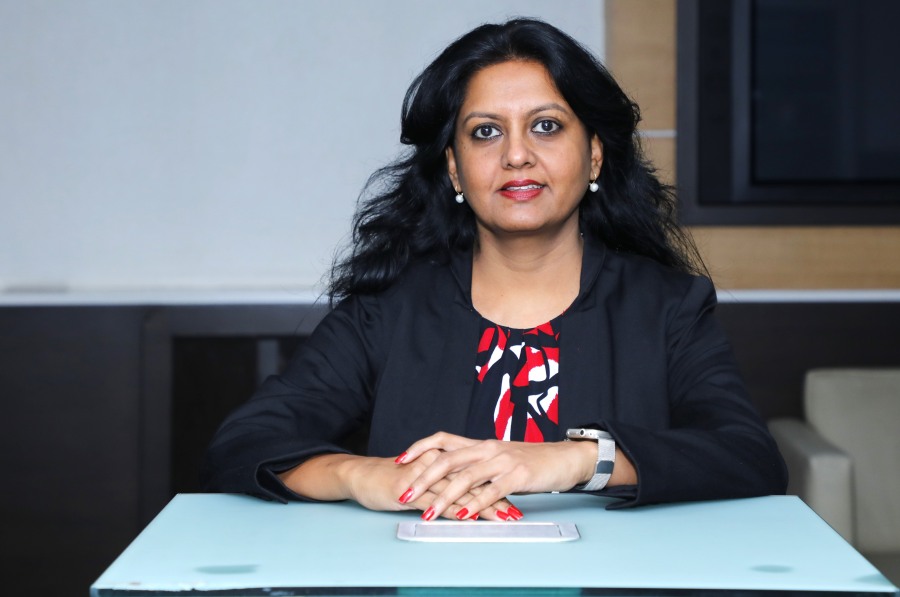
Ms. Deepa Nagraj, Global Head – Communications, ESG & CSR, Mphasis
Q. Bengaluru’s widening water demand-supply gap highlights the urgency of corporate action. How does Mphasis position water stewardship within its broader ESG and CSR strategy?
A. Bengaluru’s water challenges highlight the need for climate action that is both local and sustained. At Mphasis, our approach to water stewardship is anchored in driving on-ground impact, with a strong focus on ecological resilience, community participation, and long-term sustainability.
Through ‘One Billion Drops’, we are enabling decentralised rainwater harvesting while also integrating social impact by engaging communities, creating awareness, and supporting livelihoods for traditional well-digger communities.
Water stewardship is an important part of our broader sustainability approach, where we are focused on integrating environmental goals into our business strategy, risk frameworks, and operations. Our efforts are aligned with global priorities such as responsible water management, climate action, and ecosystem restoration.
Q. What strategic considerations led Mphasis to support the ‘One Billion Drops’ initiative, and how does it align with your long-term sustainability goals?
A. Our decision to support the ‘One Billion Drops’ initiative was driven by the urgent need to address Bengaluru’s growing water stress, particularly groundwater depletion and inefficient rainwater utilisation.
What stood out to us was the initiative’s ability to offer a simple yet highly scalable solution through percolation wells, backed by scientific planning such as GIS-based site selection and hydrological assessments. It brings together data-driven execution, strong government collaboration, and community participation. Importantly, it aligns with our long-term focus on supporting climate-resilient urban ecosystems through solutions that are not only impactful but also replicable and sustainable.
Q. With over 253 million litres of rainwater conserved annually, how does Mphasis evaluate and communicate the tangible impact of such interventions to stakeholders?
A. We take a data-driven and transparent approach to measuring impact. Today, the ‘One Billion Drops’ initiative enables the conservation of over 253 million litres of rainwater annually, with total conservation reaching approximately 25.6 crore litres.
Impact is assessed using scientific tools such as GIS mapping, soil moisture analysis, and water quality testing, along with pre- and post-implementation groundwater studies. Independent assessments have recorded groundwater level increases of up to nearly 5 metres in certain zones. These outcomes are validated through third-party assessments, including premiere institutions like IIT Madras, and are shared with stakeholders through detailed reports and ongoing monitoring frameworks.
Q. What makes your collaboration with United Way Bengaluru effective, and what should corporates look for in such partnerships?
A. Our collaboration brings together strong on-ground execution with deep community engagement. The partnership enables us to work closely with government bodies, local communities, and volunteers to ensure that implementation is both efficient and sustainable. From site selection and approvals to community awareness and ongoing maintenance, the model is designed to create shared ownership.
For organisations, it is important to partner with institutions that combine local expertise, strong stakeholder networks, and the ability to deliver measurable, scalable impact on the ground.
Q. Going forward, how does Mphasis plan to deepen its engagement in water conservation and contribute to building climate-resilient cities?
A. We remain committed to scaling our efforts in water conservation by continuing to support and expand initiatives like ‘One Billion Drops’. Our focus will be on increasing the reach of percolation wells, while strengthening scientific measurement and stakeholder collaboration.
A key strength of the initiative is its standardised and replicable model, which allows it to be implemented across diverse locations based on scientific site selection and hydrological assessments. This creates a strong foundation for scaling the intervention further.
We are also encouraged by the growing involvement of public institutions, with bodies like the Bruhat Bengaluru Mahanagara Palike exploring the replication of percolation wells across the city, which can significantly amplify the long-term impact of such efforts.




.png)