ARE Infra Heights and the Architecture of Compassion in Urban India
As Indian cities expand at an unprecedented pace, conversations around development are increasingly questioning what progress truly means. Beyond concrete and connectivity, there is a growing recognition that urban growth must also account for empathy, coexistence, and responsibility toward all forms of life. In this context, animal welfare is emerging as a quiet yet powerful marker of a society’s moral health, reflecting how development choices align with compassion.
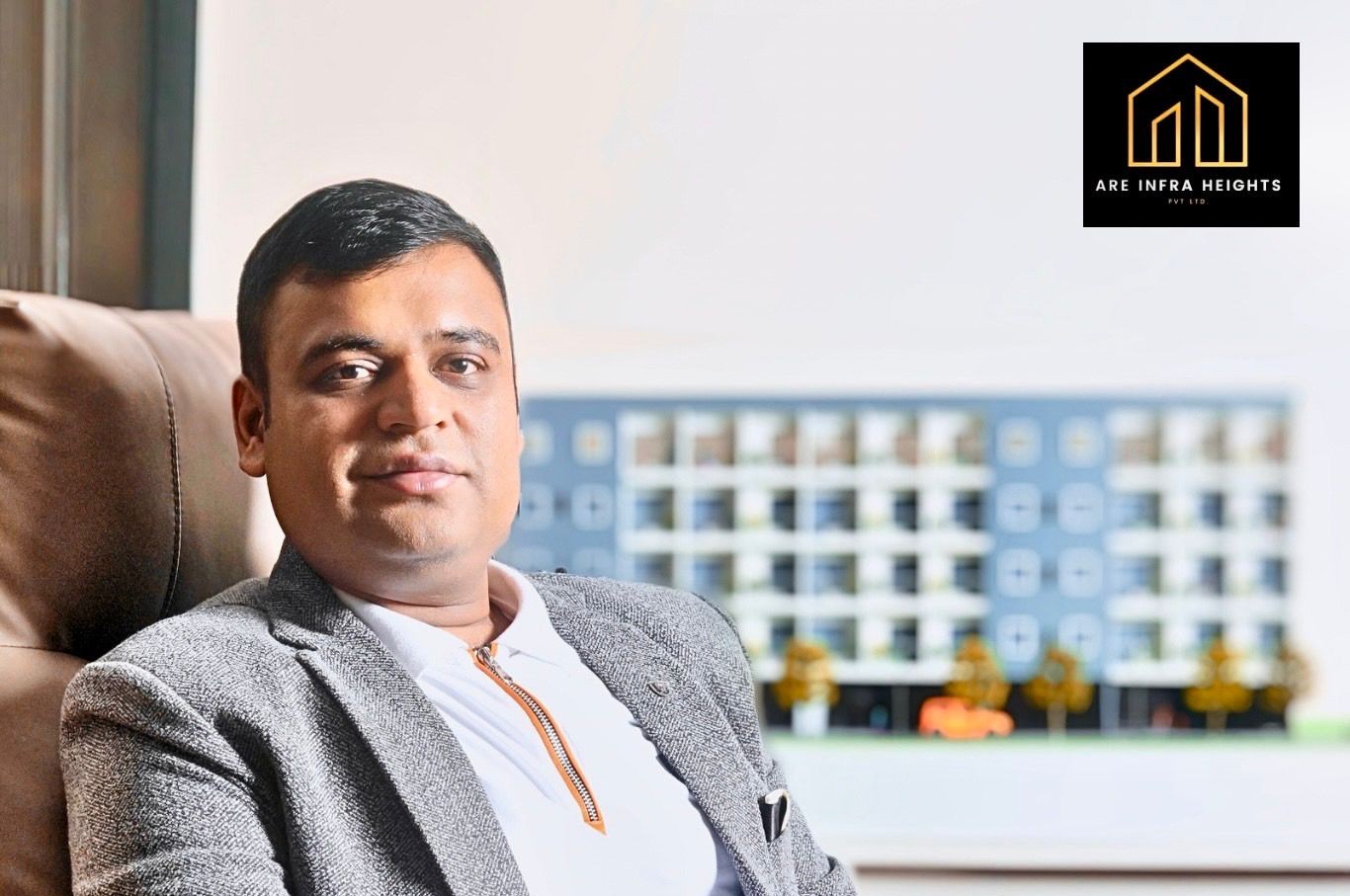
In this interview, Deepak Garg, Founder of ARE Infra Heights, reflects on how the organization is reimagining social responsibility by placing compassion at the core of its development philosophy. He speaks about ARE Infra Heights’ association with Sanjay Gandhi Animal Hospital, the influence of service-led leadership, and the belief that meaningful impact comes from participation rather than optics. The conversation explores how hands-on engagement in animal welfare is shaping internal culture, redefining corporate responsibility, and offering a replicable model for ethical, life-centric development in India’s evolving urban landscape.
Scroll down to read the full interview:
Q. As a real estate development group, how does AREInfra Heights define its larger social responsibility beyond infrastructure creation, and what role does compassion play in shaping this philosophy?
A. At ARE Infra Heights, we believe development should not end at buildings and roads. Infrastructure shapes cities, but compassion shapes societies. Our larger responsibility lies in how our work touches lives—human and non-human alike. Compassion is not an add-on to our philosophy; it is the lens through which we view responsibility. It reminds us that progress without empathy is incomplete, and that growth must coexist with care.
Q. What internal values or ethical considerations influenced your decision to focus on animal welfare as a key area of engagement at this stage of the company’s journey?
A. Animal welfare resonated deeply with our internal values of coexistence and respect for life. At this stage of our journey, we felt the need to engage with a cause that is often overlooked but deeply reflective of a society’s conscience. Animals cannot speak for themselves, and that silence places a moral responsibility on those who can act. The decision came from within—not as a strategy, but as a reflection of who we are becoming as an organization.
Q. Your association with Sanjay Gandhi Animal Hospital goes beyond financial support. How does working closely with the hospital team change the way the organization understands hands-on social responsibility?
A. Being present on the ground changes everything. When our team interacts with veterinarians, caregivers, and volunteers, social responsibility stops being theoretical. You witness the exhaustion, the emotional resilience, and the quiet dedication involved in animal care. This proximity has taught us that true responsibility is not transactional—it is participative. It requires time, humility, and willingness to learn.
Q. Under the guidance of Smt. Maneka Gandhi Ji, what learnings or perspectives have most shaped ARE Infra Heights’ approach to animal welfare and service-driven responsibility?
A. Smt. Maneka Gandhi Ji brings clarity and purpose to service. One of the strongest learnings from her guidance is that compassion must be disciplined and consistent, not emotional or occasional. She emphasizes accountability, sustainability, and action over symbolism. This perspective has helped us understand that service is not about visibility—it is about responsibility carried quietly and continuously.
Q. From a long-term impact lens, how do you envision this partnership strengthening animal care infrastructure and improving recovery and rehabilitation outcomes at the hospital?
A. In the long term, we see this partnership contributing to stronger systems rather than isolated interventions. This includes better recovery spaces, improved boarding facilities, and support mechanisms that ease the pressure on caregivers. The goal is to enable the hospital team to do what they already do exceptionally well—but with greater capacity, stability, and sustainability.
Q. The emphasis on volunteering over monetary contribution is central to this initiative. How is ARE Infra Heights encouraging its employees, partners, or community members to actively participate in service-led engagement?
A. We are encouraging participation by example rather than instruction. When leadership shows up, it sets a tone. We invite our employees and partners to visit, observe, and contribute their time in whatever way they can—whether through on-ground assistance, awareness efforts, or skill-based support. Volunteering becomes meaningful when it feels personal, not mandated.
Q. Have you observed any early cultural or behavioural shifts within your organization as a result of engaging directly in animal welfare initiatives?
A. Yes, subtly but clearly. There is greater sensitivity in everyday conversations and a stronger sense of shared responsibility. People are more thoughtful, more patient. Engaging with animal welfare has reminded us that kindness is not weakness—it is strength. That realization quietly influences workplace culture.
Q. In terms of measurable outcomes, what indicators will you track to assess the success of this association?
A. While compassion cannot always be measured, impact can. We will look at tangible improvements such as enhanced treatment capacity, better shelter conditions, smoother recovery processes, and increased volunteer participation. We will also value qualitative feedback from the hospital team, because lived experience often tells a deeper story than numbers alone.
Q. Looking ahead, do you see this initiative evolving into a scalable model for corporate participation in animal welfare that others could replicate?
A. Yes, very much so. We believe this model—grounded in participation rather than just funding—is replicable across industries. It does not require large budgets, only genuine intent. If more organizations choose involvement over optics, animal welfare in this country can see meaningful transformation.
Q. How does this partnership influence ARE Infra Heights’ broader responsibility roadmap, and what future priorities might emerge from this experience?
A. This association has reinforced our belief that responsibility should be lived, not planned on paper. Going forward, we see our roadmap becoming more grounded, more people- and life-centric. Environmental balance, humane coexistence, and community-led initiatives will naturally emerge as priorities because this experience has reshaped how we view impact itself.



.png)