How the Mehta Family Foundation Is Building Long-Term Academic Capacity Across India’s IITs
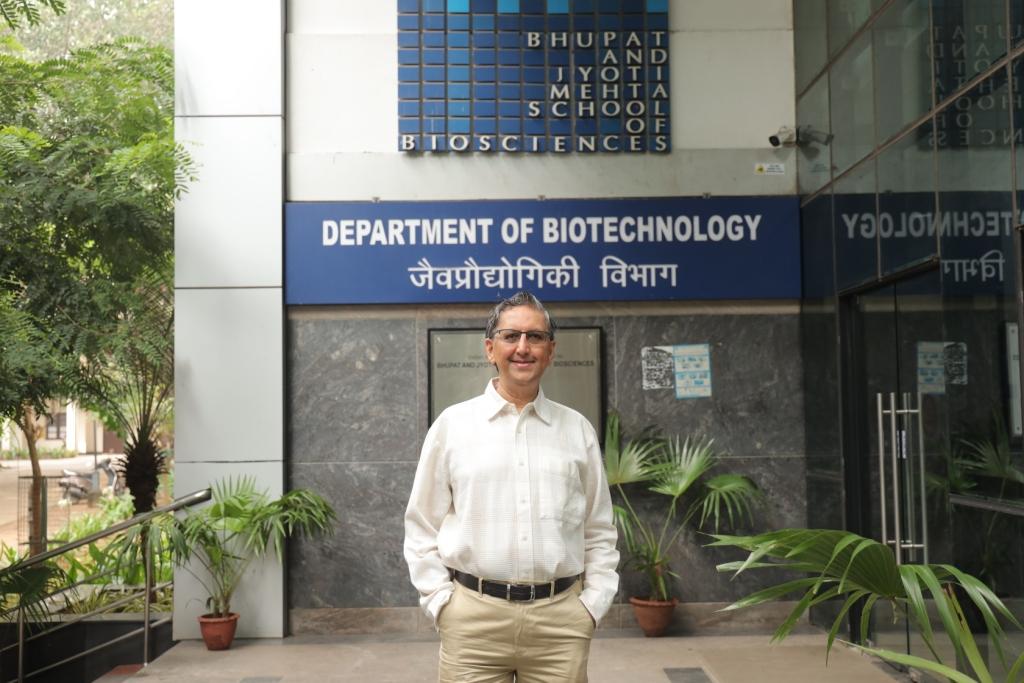
India’s future as a knowledge-driven economy will depend not just on policy or funding, but on how boldly it invests in people, ideas, and institutions. In this conversation with TheCSRUniverse, Mr. Rahul Mehta, Founder of the Mehta Family Foundation (MFF), shares why he believes philanthropy can play a unique and transformative role in strengthening India’s higher education ecosystem.
A Silicon Valley entrepreneur turned education philanthropist, Mr. Mehta chose an unusual path: building long-term academic capacity within India’s public institutions rather than creating a private university. Over the past two decades, MFF has established eight schools across six IITs, focusing on critical and future-facing fields such as data science, artificial intelligence, biosciences, health technology, and sustainability.
In this interview, Mr. Mehta reflects on the idea of “patient philanthropy” as risk capital for talent, the power of long-term partnerships with IITs, and why investing in universities is ultimately an investment in the nation’s intellectual future.
We explore these ideas in greater detail in the interview below.
Q&A
Q. How would you describe the core mission of the Mehta Family Foundation and its vision for India’s higher education landscape?
A. The Mehta Family Foundation’s core mission is to build India’s intellectual capital, which is the bedrock of every nation’s long-term prosperity. We are focused on the systematic strengthening of India’s knowledge infrastructure. History shows that economies grow when universities lead. Rooted in public institutions, India needs its own version of a fast-track transformation.
Each school we have established in biosciences and bioengineering, data science and artificial intelligence, and sustainability, represents a deliberate intervention to expand the country’s capacity in frontier areas that would directly impact its immediate and future goals. These are long-term investments that shape curricula, research priorities, and intellectual ecosystems, along with new infrastructure and global collaborations.
The Foundation constantly aims to cultivate scholars who think across disciplines, capable of connecting AI to healthcare, biosciences to sustainability, and data to public policy.
Q. What first inspired your journey in education philanthropy, and how did it evolve into long-term partnerships with India’s IITs?
A. My interest in education philanthropy began with a simple observation that countries which lead the world do so because they invest deeply in intellectual capital. When I was building tech companies in the United States, I saw firsthand how entire innovation ecosystems were anchored by universities. That convinced me that if India is to prosper sustainably, it must produce knowledge.
The IITs became our natural partners because they represent the highest standard of public education in India. They already have the talent, integrity, and institutional depth. What they often lack is the capital and strategic impetus to expand into emerging disciplines. Our role has been to catalyse that change, to seed new schools in areas like data science, AI in healthcare, and sustainability, and to stay involved until those schools are academically self-sustaining.
Each collaboration is designed to outlast us, to embed new disciplines, attract global scholars, and create capacity for the next generation. That, to me, is what meaningful philanthropy looks like, it is patient, strategic, and inseparable from the nation’s intellectual future.
Q. Why did you choose to build within public institutions like the IITs instead of creating a private university of your own?
A. The Foundation’s goal has always been to augment the existing education ecosystem instead of reinventing the wheels. We believe that real transformation happens when public institutions evolve because they serve as the foundation of equitable access and long-term national capacity. The IITs are public assets that are transparent, meritocratic, and globally respected; strengthening them will escalate the national impact.
When we build within the IITs, each new school becomes a permanent part of the academic system, owned and operated by the institute. That ensures continuity, credibility, and sustainability beyond the life of any one donor, which in my eyes should be the role of true philanthropy. Moreover, IITs are synonymous with rigorous academic standards, a culture of excellence, and a national brand of trust.
Q. How do you go about structuring a partnership with an IIT — what does it take to align vision, academic priorities, and execution?
A. Building a new school inside an IIT is a shared act of institution-building. The process begins with alignment of purpose and the understanding that we are not funding projects, but creating new academic capacity in areas critical to India’s future. We begin by identifying disciplines that require a more interdisciplinary approach in critical need based domains and then work with their academic leadership to define what the next decade of that field should look like in India.
Once that vision is shared, we get deeply involved in the details. An IIT is a complex ecosystem, and institutional reform has to be co-created. Our role is to simply provide the strategic push and the capital to accelerate the progress. We bring industry experience, systems thinking, and long-term commitment while the IITs bring academic excellence and national credibility. It is slow, deliberate work, often taking decades before seeing any tangible results.
Q. How does the Foundation support these schools beyond funding, for example, in faculty development, research infrastructure, or student engagement?
A. Funding is a mere beginning of our commitment. Building an academic institution requires far more than financial investment. Our team of advisors work closely with each IIT to support faculty recruitment, curriculum design, and research infrastructure so that the schools can stand as centers of excellence. Through global collaborations like the Collaborative for Academic and Research Excellence (CARE) and the Mehta-Rice Engineering Scholarship Program, we connect Indian faculty and students with international researchers to strengthen both pedagogy and research outcomes.
To bridge the missing link of collaboration in the Indian academic ecosystem, we have launched our flagship CARE Conferences, where researchers and experts from different Indian and global institutions begin to engage with one another. This results in a dramatic improvement in the quality and scale of research. We believe that no great problem can be solved in isolation and these conferences replace the existing academic silos with a network of shared learning and collective innovation.
Q. How do you define “patient philanthropy,” and in what ways can it act as a kind of venture capital for talent — backing people and ideas long before the results are visible?
A. Patient philanthropy is an investment in ideas whose returns are measured not in quarters but in generations. Education and research take time, say, for example, a decade to build a school, another to see its alumni lead industries or influence policy. If we expect immediate outcomes, we will never create institutions that endure.
In that sense, I often view philanthropy as venture capital for intellectual capital. We seed early-stage ideas in the form of new schools, new disciplines, new collaborations that traditional funding structures would consider too uncertain or too slow to back. Just as venture investors back teams before products, we back faculty and students before outcomes. The risk is higher, but so is the long-term societal return.
What patient philanthropy does best is create time for excellence. It allows ideas to mature, researchers to experiment, and institutions to grow without the pressure of short-term validation. That kind of trust is the rarest commodity in education today, and it is precisely what India needs if it is to build knowledge ecosystems that rival the best in the world.
Q. How do you decide which emerging fields, such as AI, health sciences, or sustainability, deserve deep, long-term investment?
A. We choose areas that sit at the intersection of national relevance and global inevitability. The question we ask is simple: where will knowledge create the greatest multiplier effect for India for today and have relevant implication for the next fifty years? Artificial intelligence, health sciences, and sustainability are structural forces reshaping not just every economy, but also an immediate need of the hour for as populous a country as India. If India does not build indigenous capacity in these domains, we will remain dependent on external innovation for solutions to our own problems.
The process is evidence-led. We study where global research is heading, where India’s capacity lags, and where the IITs already possess a base of excellence that can be expanded.
Q. What challenges have you faced while working within India’s public education ecosystem, and how do you navigate institutional complexities?
A. Working within India’s public education system requires clarity of purpose. The IITs are among the country’s most capable institutions, but they operate within a framework of government processes that naturally move at their own pace. That can be trying if one expects transactional efficiency. But institution-building is a negotiation between vision and structure.
Our approach is to engage deeply and align with directors, faculty, and policymakers until everyone sees the larger goal. I treat each project as a life-long partnership. When the objective is clear and the intent is transparent, the system moves to build a long-lasting entity.
Q. How can philanthropy differ from CSR or government funding in shaping research culture, curriculum design, and innovation mindsets within universities?
A. Philanthropy, at its best, is the most agile form of capital in education. It can act with intent, flexibility, and vision, and take intellectual risks that institutions and corporations cannot. It is not bound by election cycles, quarterly reporting, or shareholder sentiment. That freedom allows it to invest in ideas before they are fashionable, and in disciplines before they become commercially viable.
MFF’s philosophy is unique as we not only provide funding but also collaborate with each institute in co-creating academic programs, including curriculum design, faculty hiring, research focus, international exchange programs, along with infrastructure design. While CSR goals may oscillate year on year, we have a much longer commitment to our projects.
Q. How do you balance global collaborations with the need to strengthen local academic capacity and self-reliance?
A. Global collaboration is valuable only when it strengthens local capability, while also adding value to both sides. Our scholarship programmes with institutions like Rice University, for instance, are designed to create two-way learning. Indian scholars gain access to advanced research environments, while global faculty engage with India’s scale and complexity. This exchange enriches both sides.
The intent is not to replicate Western models but to build Indian models informed by global excellence. We work with international partners to expose students and faculty to world-class research, but the direction and purpose must primarily remain Indian.
Q. What markers or indicators do you look at to assess the long-term impact of your investments across these IIT-based schools?
A. Impact in education cannot be captured by short-term metrics. The real question is whether the institution we helped create continues to thrive once we step back. We consider ourselves successful when a school is fully integrated into the IIT’s academic and administrative fabric, when its faculty attract their own research grants, and when students graduate into roles that advance India’s scientific and technological goals. One such gratifying moment for us has been the recent completion of 20 years of our first Bioscience school at IIT Madras.
We also look for intellectual indicators like the emergence of new research clusters, cross-disciplinary courses, or collaborations that did not exist before. When a School of Data Science begins working with a School of Biosciences on health analytics, or when sustainability becomes embedded in engineering curricula, we know the ecosystem is evolving.
Q. On a personal note, how has your transition from a Silicon Valley entrepreneur to an education philanthropist changed the way you view innovation, leadership, and legacy?
A. Entrepreneurship taught me that innovation is less about invention and more about the ability to connect ideas, people, and execution. In Silicon Valley, success depends on speed, iteration, and measurable outcomes. In education, the timeframes are inverted. You cannot iterate a university every quarter. You have to think in decades. That transition has taught me patience and precision and to value depth over velocity.
Leadership, in philanthropy, demands a different kind of humility. As an entrepreneur, I was accountable to markets. But as a philanthropist, I am accountable to the future. You cannot control the outcome, only the intent and the process. The challenge is to lead without ownership, to influence institutions without possessing them, and to build structures where credit diffuses but impact endures. That shift in mindset has been both humbling and liberating.
As for legacy, I do not think in those terms. A legacy worth having is one you do not have to claim. If fifty years from now, students graduate from institutions we helped build unaware of who funded them but go on to change how India thinks about science, technology, or sustainability, that anonymity will be the finest measure of success.




.png)