Generations of Giving: The Quiet Strength of Family Philanthropy Beyond India’s Metros
Across India’s small towns and districts, family philanthropy has long played a quiet but foundational role in shaping social outcomes- supporting schools, livelihoods, healthcare, and community welfare far beyond the reach of formal systems. Rooted in proximity and personal accountability, this form of giving often operates without visibility or recognition, yet it sustains trust, continuity, and dignity at the grassroots.
One such example is Aayom Welfare Society, a multi-sector social organisation that began in Fatehpur, Uttar Pradesh, and has evolved into a nationally active platform for community-led development. Established in 2006, Aayom draws from the Mansingh family’s century-old tradition of public service- tracing back to Shri Rai Bahadur Ishwar Sahai, a pioneer of India’s cooperative movement, followed by Rai Sahab and Padma Shri awardee Bishan Mansingh, whose contributions spanned agriculture, education, and diplomacy. The tradition was carried forward through successive generations engaged in agriculture, education, public administration, and institution-building.
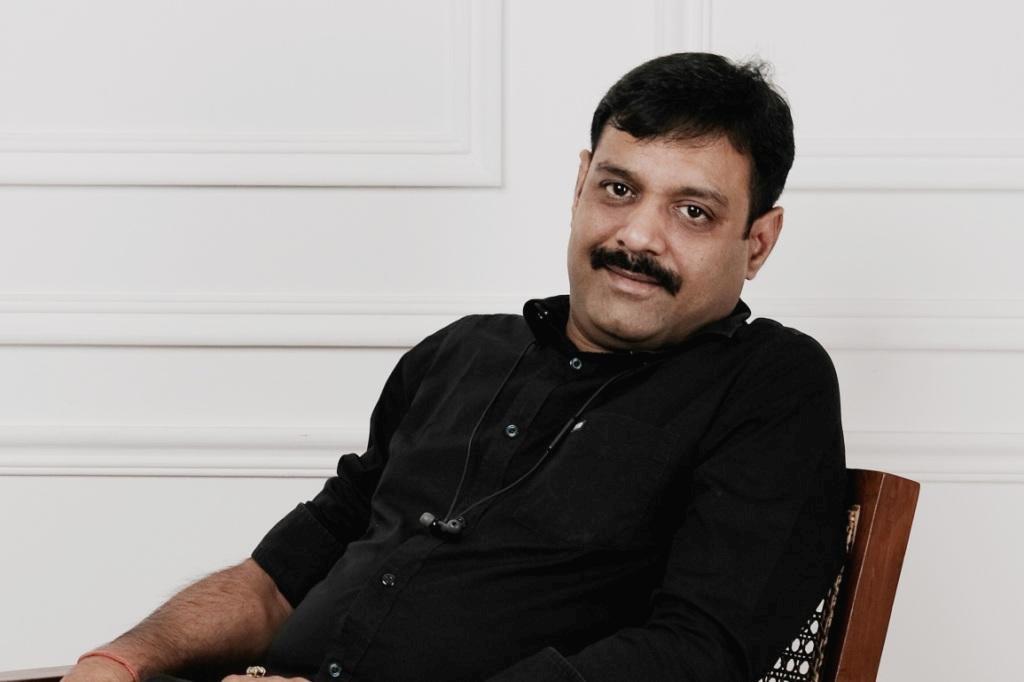
In this interview with TheCSRUniverse, Mr. Prerrit Mansingh, Secretary of Aayom Welfare Society and a fifth-generation custodian of this legacy, reflects on how small-town roots shape social responsibility, why continuity matters in Tier 2–3 regions, and how family philanthropy can meaningfully complement government and CSR efforts.
Read along for the full interview:
Q. Aayom Welfare Society has its roots in Fatehpur which has grown into a multi-sector social organisation. Please tell us a little more about its current structure, focus areas and impact so far.
A. Aayom Welfare Society began in Fatehpur as a response to local, human needs,education gaps, livelihood insecurity, lack of dignity-driven opportunities. Over time, as the scale and complexity of these challenges became clearer, Aayom evolved into a multi-sector organisation with a structured governance model, professional teams, and strong grassroots partnerships.
Today, Aayom works across women empowerment, skill development, livelihood, education, health and hygiene, social reintegration, animal welfare, policy advocacy, and climate-conscious community practices. Our structure combines on-ground community teams, domain experts, and program management units, allowing us to work with both deep empathy and operational rigour.
In terms of impact, we work across all the states of India, reaching over 80+ Cr beneficiaries in the past 20 years - women, youth, marginalised communities, jail inmates, and informal workersthrough skills training, awareness drives, policy advocacy, employment opportunities, and livelihood-linked interventions. What matters most to us, is not just numbers, but sustained outcomes: women earning with dignity, youth staying back in their districts with employable skills, and communities beginning to see development as something they own, not something delivered to them.
Q. Coming from a fifth-generation philanthropic lineage rooted in Fatehpur, how did growing up in a small-town ecosystem shape your understanding of social responsibility differently from more urban or corporate-led models of giving?
A. Growing up in a small town like Fatehpur teaches you something that spreadsheets and reports often cannot. You live among the people you serve. Social responsibility is not abstract; it has faces, names, and shared histories. When philanthropy is rooted in proximity, accountability is immediate. You cannot walk away from consequences.
Unlike many urban or corporate-led models of giving, where impact can sometimes feel transactional or time-bound, small-town philanthropy is relational and generational. You are not solving a problem for a quarter; you are invested in the future of the same community your children will grow up seeing. That instils humility, patience, and a deep sense of stewardship rather than ownership. Growing up in a family that has been committed to social welfare for generations has deeply shaped who I am. That sense of responsibility is something I consciously pass on to our team, so that our volunteers are driven not by certificates or credentials, but by a genuine desire to contribute to someone’s dignity, growth, and upliftment.
Q. Family philanthropy in India has traditionally thrived quietly, especially in smaller towns. How do you see the role of local business and civic families in shaping grassroots development beyond what formal CSR and government programmes can achieve?
A. Local business and civic families play a role that is often underestimated but deeply powerful. They understand the social fabric, informal power structures, cultural sensitivities, and trust networks of a place. This allows them to intervene in ways that are nuanced and contextually appropriate, something large programmes often struggle with.
While CSR and government schemes are essential for scale and policy alignment, local families can address gaps, experiment with solutions, and respond quickly to emerging needs. They often work in spaces that are too small, too complex, or too long-term for formal systems, but these are precisely the spaces where transformation begins.
Q. Many impactful family-led initiatives in smaller towns operate without visibility or recognition. Why do you think this ‘unseen philanthropy’ matters, and how can its contribution be better acknowledged in India’s development narrative?
A. Unseen philanthropy matters because it sustains the social backbone of countless towns and districts in India. It keeps schools running, families afloat, traditions of care alive, often without branding, reporting frameworks, or media attention.
However, invisibility also has a cost. It prevents learning, collaboration, and replication. I believe India’s development narrative must expand beyond large-scale success stories to include quiet, consistent efforts that have shaped communities over decades. Documentation, storytelling, and respectful platforms that amplify these contributions without forcing them into corporate moulds are essential.
Q. Unlike structured CSR, family philanthropy often blends personal values with long-term commitment. What advantages does this continuity bring, especially for holistic development in districts like Fatehpur and similar Tier 2–3 regions?
A. Continuity brings trust, and trust brings depth. When communities know that a family or institution will remain present beyond a single project cycle, they engage more openly, take greater ownership, and participate more responsibly. This long-term commitment makes holistic development possible where education is meaningfully linked to livelihoods, health interventions are rooted in dignity, and skill development is aligned with local markets rather than abstract employability goals.
In districts like Fatehpur, where social and economic challenges are deeply interlinked and often generational, such continuity allows interventions to mature over time. Programs are not rushed for short-term outcomes; instead, they are refined, adapted, and strengthened based on lived realities. This ensures that impact becomes embedded within the local ecosystem, rather than remaining a collection of isolated or one-time successes.
At Aayom Welfare Society, we have consciously replicated this philosophy across other states as well. Our model emphasises appointing State Heads and team under their leadership who share the same values, long-term vision, and sense of responsibility toward the community. These leaders are not present merely to justify organisational expansion or geographic presence. They are deeply engaged on the ground, building relationships, earning trust, and understanding local nuances so that interventions remain relevant, respectful, and effective.
By empowering locally rooted leadership with a shared ethos of service, Aayom ensures that continuity, accountability, and community connection remain central to our work, regardless of geography. This is what allows family philanthropy, when institutionalised thoughtfully, to create sustained and scalable impact across Tier 2–3 regions.
Q. In regions where government machinery and large CSR programmes often struggle with last-mile delivery, how can family philanthropies act as bridgesaugmenting scale with trust, proximity, and local knowledge?
A. Family philanthropies can act as translators and connectors, bridging policy intent with lived reality. They can pilot models, mobilise communities, and provide feedback loops that improve programme design and execution.
By partnering with government bodies and CSR initiatives, family-led organisations like Aayom Welfare Society can ensure that scale does not come at the cost of sensitivity. Trust built over generations enables access to households and communities that formal systems may find hard to reach.
Q. Aayom Welfare Society emerged from a family tradition of service but evolved into a professional organisation. What were the key inflection points in transitioning from informal giving to institutionalised impact?
A. Aayom Welfare Society is rooted in a long, lived tradition of service that predates any formal structure. For generations, our family has worked for the welfare of local communities in and around Fatehpur. What we know by heartand carry with prideis the legacy of our ancestor Rai Bahadur Ishwar Sahai, who worked closely with local farmers and communities, supporting them through agriculture-led initiatives, access to loans, education, and social support systems. This spirit of service was carried forward by his son, Rai Sahab/Padam Shri Bishan Mansingh, and continued by subsequent generations.
For decades, this work was deeply impactful but largely scattered and informaldriven by personal responsibility rather than organisational design. The first major inflection point came with the realisation that while individual efforts matter, bringing them together under one unified umbrella could significantly expand both reach and depth. The thought was simple but powerful: to organise what we were already doing in spirit, and to reach as many people as possible without losing the values that defined our work.
As Aayom’s footprint grew, the second inflection point emergedrecognising that good intentions alone are not enough. With scale came the responsibility to be accountable, measurable, and sustainable. This led us to formalise governance, bring in professionals, and adopt structured programme design and monitoring frameworks.
The third shift was opening ourselves to collaboration, partnering with corporates, donors, domain experts, and government agencies. Institutionalisation enabled us to scale responsibly while staying rooted in our founding ethos. Importantly, professionalism did not dilute empathy; it strengthened itallowing compassion to be delivered with consistency, credibility, and long-term impact.
Q. Your work spans skills, women’s empowerment, climate action, and social reintegration. How important is it to adopt an integrated, ecosystem approach rather than going deeper in a particular domain?
A. For communities, life does not exist in silos. A woman’s empowerment is linked to her income, health, environment, and social acceptance. A youth’s employability is linked to education, aspiration, and local opportunity.
An integrated approach allows us to address root causes rather than symptoms. While depth is important, ecosystem thinking ensures that progress in one area reinforces progress in another, creating resilient and self-sustaining communities.
Q. Smaller towns often face the dual challenge of aspiration and limited opportunity. What role can local philanthropic families play in ensuring youth and women do not have to migrate to access dignity, livelihoods, and growth?
A. Aayom Welfare Society has been actively playing this role on the ground. Our work focuses on enabling youth and women to build livelihoods where they live through skill development programmes tailored to local market demand, support for micro-enterprises, and interventions that connect training to real income opportunities. Whether it is women gaining financial independence through stitching, handicrafts, food processing, or youth acquiring employable skills in trades relevant to their region, the emphasis is always onlocal relevance and long-term viability.
Beyond livelihoods, Aayom also plays a crucial mentoring and aspirational role. By working closely with communities over extended periods, we help young people and women see value and possibility in staying rooted. Exposure, guidance, and consistent handholding reinforce the idea that success, dignity, and contribution do not require abandoning one’s hometown. In this way, Aayom drawing from a family-led philanthropic ethos acts as both an enabler of opportunity and a custodian of local aspiration, ensuring that growth is inclusive, grounded, and sustainable.
Q. For next-generation members of philanthropic families who may be inspired but unsure where to begin, what principles or lessons from your own journey would you share to make giving meaningful, sustainable, and locally relevant?
A. I am sure the following believes of mine would resonate with people:
- Start where you belong and listen before you act.
- Respect the wisdom of the community.
- Build for the long term, not for applause.
- Professionalise without losing compassion.
- And most importantly, understand that philanthropy is not about charity, it is about shared responsibility and dignity.
Giving becomes meaningful when it strengthens systems, sustainable when it builds local capacity, and impactful when it remains deeply human.


.png)