From Green Intent to Climate Credibility: The Net-Zero Shift Shaping India’s 2026 Outlook
India’s sustainability discourse is entering a more exacting phase. As regulatory expectations sharpen, investors increasingly reward verified performance, and supply-chain emissions move into focus, the conversation is shifting decisively from climate intent to climate credibility. Net-zero is no longer a distant ambition anchored in long-term pledges; it is fast becoming an operational, governance, and measurement imperative for organisations across sectors. While green buildings and efficiency-led interventions remain important, they are no longer sufficient on their own. The emerging challenge is systems-level decarbonisation, one that accounts for lifecycle performance, Scope 3 emissions, and the ability to measure, report, and verify outcomes consistently over time. In this environment, credibility is increasingly determined by data integrity, audit readiness, and the integration of carbon considerations into core business decisions.
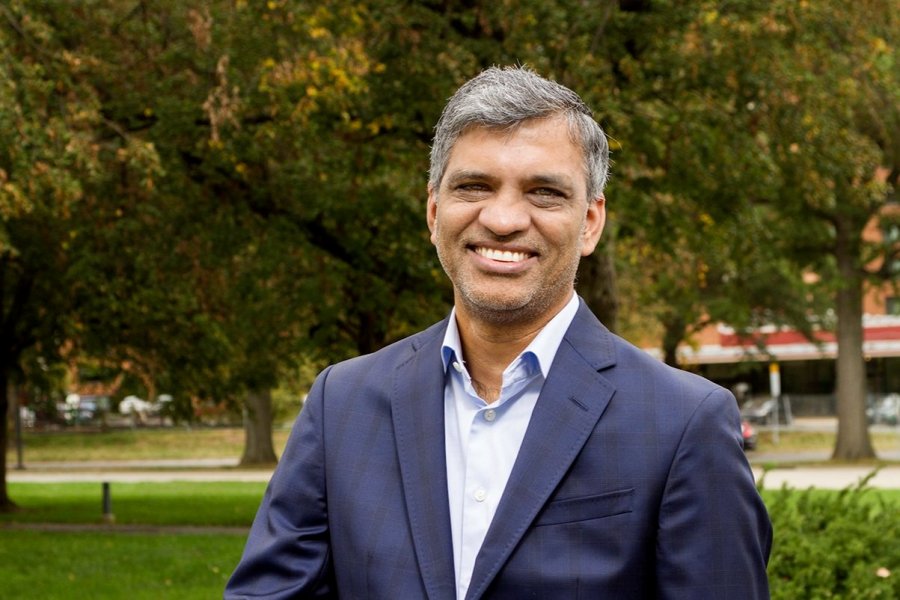
Against this backdrop, TheCSRUniverse spoke with Mahesh Ramanujam, Founder & CEO of the Global Network for Zero (GNFZ), a globally recognised voice on net-zero innovation and climate accountability. He brings deep insight into how sustainability frameworks are evolving from symbolic commitments to verifiable pathways that align ambition with measurable outcomes.
In this conversation, he reflects on why 2026 may mark a turning point—from green buildings to net-zero ecosystems; why Scope 3 emissions have emerged as India’s most critical climate frontier; and how mid-sized enterprises, universities, and Tier-2 and Tier-3 cities are poised to drive the next wave of climate action. He also examines the growing role of MRV, digital verification, and climate-aligned capital in redefining accountability.
As India’s climate journey moves from promise to proof, this discussion offers timely clarity on what credible, scalable net-zero action will require in practice. Read on.
Q&A
Q. India’s sustainability landscape is changing rapidly. From your experience, what is the most important shift in how organisations are approaching net-zero today; and how do you see this shaping the biggest climate storyline of 2026?
A. What stands out most to me right now is how decisively net-zero has moved from aspiration to action based on verifiable data. For years, climate targets and goals sat comfortably in long-term strategy documents. Today, boards are operating in a very different reality shaped by disclosure frameworks, assurance expectations, and buyer-led scrutiny across supply chains. In India, SEBI’s BRSR Core has accelerated this shift by establishing a common baseline for ESG metrics and signalling a move toward stronger assurance and value-chain disclosures.
This is why the defining climate storyline of 2026 will be proof over promise. Credibility will increasingly be measured through audit-ready emissions inventories, material Scope 3 visibility, and decisions linked directly to outcomes such as capital allocation, procurement, and asset strategy. In the commercial built environment, this will translate into a clear shift from symbolic green features to performance-based, whole-life decarbonisation expectations.
Q. GNFZ emphasises moving from green buildings to verified net-zero ecosystems. How does this transition change expectations for businesses and developers?
A. The transition raises expectations from asset-level intent to portfolio-level outcomes. Green buildings historically rewarded design choices, efficient systems, and compliance-ready documentation. A verified net-zero ecosystem mindset forces a broader question: How do buildings perform across their full lifecycle and value chain, including energy, materials, operations, tenant behaviour, and supplier emissions?
For businesses and developers, this changes three things. First, carbon becomes a governance metric alongside cost and risk. Second, procurement becomes strategic, as embodied carbon in materials and contractor practices start to matter as much as operational efficiency. Third, performance becomes longitudinal. Disclosure and verification must hold over time, not just at commissioning. This shift is particularly relevant given that buildings and construction contribute approximately 37% of energy and process-related CO₂ emissions globally.
Q. What makes Scope 3 emissions the toughest climate frontier for Indian organisations, and where do you see the biggest gaps in how companies are currently attempting to measure and report them?
A. Scope 3 is challenging because it sits at the intersection of data, influence, and accountability. It spans upstream and downstream activities across suppliers, contractors, logistics partners, tenant operations, and end-use patterns. The GHG Protocol notes that Scope 3 can represent over 90 percent of a company’s total emissions in some cases, which explains why it has become central to climate credibility.
The biggest gaps today include inconsistent supplier data quality, limited primary data for materials and services, unclear boundary-setting, and reporting approaches that remain activity-based without verification logic. In commercial real estate, organisations often measure operational electricity well but struggle to quantify embodied carbon, fit-out emissions, leased asset boundaries, and vendor emissions consistently. In 2026, leadership will come from treating Scope 3 as a management system rather than a one-time calculation. And to be clear, the tools exist today to measure and mitigate Scope 3 with confidence.
Q. What concrete steps should Indian businesses prioritise to make their supply chains genuinely net-zero aligned, especially as supply-chain credibility becomes central to climate action?
A. In practice, supply-chain alignment comes down to disciplined prioritisation rather than grand declarations. Four steps can help businesses move from intent to action. The first is to identify where emissions actually sit in the supply chain by focusing on high-impact suppliers based on spend, volume, and carbon intensity. The second is to set clear baseline expectations for suppliers, such as basic emissions data transparency, use of recognised emissions factors, and a commitment to improve performance over time.
The third step is enablement rather than enforcement. Many suppliers need guidance, shared tools, and realistic timelines to measure and reduce emissions effectively. Immediate pass-or-fail requirements often slow progress instead of accelerating it. The fourth step is to establish a simple but robust system to measure, report, and verify emissions on a regular basis, supported by audits and corrective actions where needed.
Globally, the direction of where we need to gol is clear. Carbon pricing now applies to roughly 28 percent of global greenhouse gas emissions, and revenues exceeded 100 billion dollars in 2024. This reflects a broader market shift where measurable performance is increasingly influencing procurement decisions, supplier selection, and long-term business relationships.
Q. Mid-sized enterprises and universities are increasingly becoming climate accelerators. What is driving this shift, and what potential do you see in this segment?
A. What I find encouraging is how momentum is building outside the traditional corporate spotlight. Mid-sized enterprises and universities are emerging as climate accelerators because they combine scale with agility. Mid-sized businesses are often closer to day-to-day operations, which allows them to move faster on practical measures such as energy efficiency, electrification, renewable energy procurement, and waste reduction. They may not have the complexity of large conglomerates, but they are large enough for their actions to create meaningful emissions impact.
Universities play a similar role for a different reason. They function like compact cities, with classrooms, hostels, laboratories, housing, transport, and utilities operating within a single campus. Their long ownership horizons make them well suited to invest in measures that deliver steady, long-term emissions reductions. A recent example is Ajeenkya D Y Patil University in Pune that has publicly committed to becoming carbon neutral by 2030, focusing on energy efficiency, renewable energy adoption, water stewardship, and waste management. Initiatives like this show how institutions can translate ambition into structured action.
Therefore, the real potential lies in replication. Their size allows them to balance impact with speed, making them an important bridge between pilot projects and economy-wide climate transformation.
Q. What is enabling Tier-2 and Tier-3 cities to contribute more meaningfully to India’s net-zero journey, and what support systems do they still need to scale their impact?
A. Much of India’s next phase of climate action will be shaped by where growth is happening and that increasingly points to Tier-2 and Tier-3 cities. New commercial districts, industrial parks, education hubs, and healthcare campuses are expanding rapidly. As climate risks intensify, resilience and efficiency become economic priorities. World Bank analysis underscores that India will require trillions of dollars in climate-resilient urban infrastructure investment by mid-century, highlighting both necessity and opportunity.
What these cities still need includes stronger local capacity for building performance enforcement, accessible energy-efficiency financing, standardised metering and benchmarking, and professional ecosystems such as auditors, energy managers, and verification specialists. In 2026, the cities that scale the fastest will be those that combine growth with credible measurement.
Q. How is the language of climate accountability evolving with the rise of MRV, digital verification, and climate-aligned investment; and what does this mean for businesses aiming for credibility rather than just compliance?
A. The language of climate accountability is quietly but fundamentally changing. It is moving from commitments to controls. MRV, meaning measurement, reporting, and verification, has become the core grammar of credibility because it answers a fundamental question: Can performance be trusted? Digital verification is accelerating this shift through better data capture, traceability, and audit trails.
For businesses, this means credibility will increasingly be earned through process discipline. Defined boundaries, consistent methodologies, strong data governance, and independent assurance will matter as much as ambition. Compliance remains important, but capital markets are rewarding confidence in numbers. In 2026, climate-aligned investment will increasingly favour organisations that can demonstrate repeatable, verified emissions performance.
Q. Based on GNFZ’s certification projects so far, what are the key learnings from Indian organisations that have successfully completed net-zero assessments or certifications?
A. We have seen a few patterns emerge from Indian organizations that have been successful on their net-zero journeys. First, strong outcomes occur when net-zero is treated as a business transformation program linked to procurement, capital planning, operations, and facilities management rather than as an ESG overlay. Second, successful teams establish a credible baseline early and prioritise continuous improvement rather than perfection in year one. Third, they invest in internal capability with cross-functional ownership spanning finance, procurement, operations, and sustainability.
In the commercial built environment, success is often driven by focusing first on measurable levers such as energy efficiency and electrification while simultaneously developing a structured Scope 3 engagement approach. Verification becomes far easier when auditability is designed into the system from the outset.
Q. What are the biggest misconceptions businesses still hold about designing for net-zero from the outset rather than relying on retrofits later?
A. One misconception I encounter frequently is that net-zero by design is inherently more expensive, while retrofits are more practical. In reality, retrofits often involve hidden complexity such as downtime risk, tenant constraints, stranded equipment, and design limitations. Designing for net-zero early enables better orientation, envelope choices, right-sized systems, and integrated metering, which lowers lifecycle costs and simplifies verification.
Another misconception is that net-zero is purely an operational energy issue. Whole-life carbon covering materials, construction, fit-outs, and supply chains must be addressed early or emissions are locked in for decades. That is why 2026 will favour organisations that treat carbon as a design constraint alongside cost, schedule, and performance.
Q. In the next 1–2 years, what are GNFZ’s priorities for India as the demand for verified climate outcomes continues to grow?
A. Looking ahead, the priority is to help accelerate India’s shift from disclosure to demonstrable outcomes, particularly across commercial spaces and organisational portfolios. This includes strengthening lifecycle and Scope 3 measurement readiness, enabling credible verification pathways aligned with evolving disclosure expectations, and supporting repeatable frameworks that work across offices, campuses, industrial assets, and logistics environments.
Another focus is scalability. Audit readiness and verification must be accessible beyond a small group of large enterprises. As BRSR Core assurance and value-chain disclosure expectations mature, demand will grow for systems that are incremental, comparable, and practical for Indian operating realities.









.png)