Energy Bots and the Case for Smart Water Management as Climate Action in India
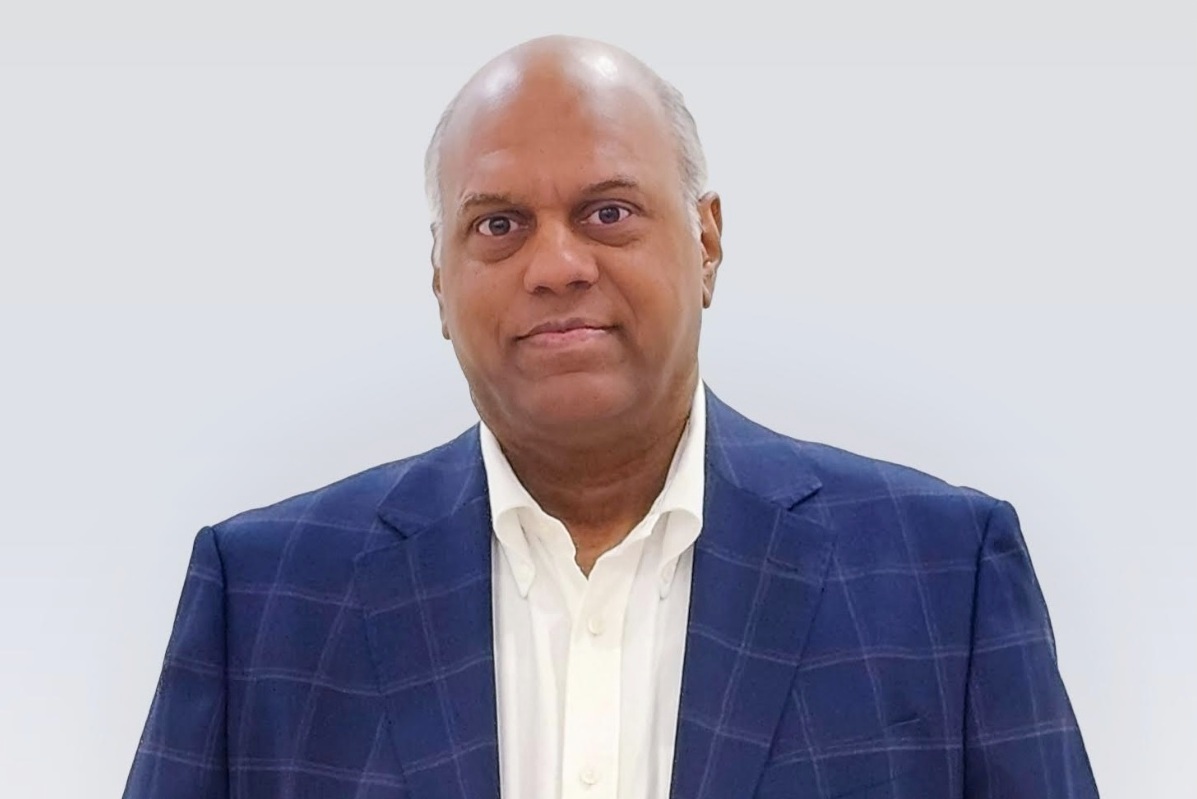
As India grapples with mounting water stress, rapid urbanisation, and the climate costs of inefficient resource use, the conversation is gradually shifting from scarcity alone to smarter management of what already exists. Technology-led water intelligence is emerging as a critical climate intervention, one that operates quietly at the household level yet delivers collective impact at scale. In this interview with TheCSRUniverse, Mr. Murali Mantravadi, Joint Managing Director of Energy Bots, unpacks how smart water management can serve as preventive climate action, reduce invisible wastage, and build resilient urban ecosystems. Drawing from the evolution of Flosenso and Energy Bots’ on-ground learnings across Indian cities, the discussion explores the role of data, automation, and citizen participation in transforming water and energy stewardship into a scalable, CSR-driven pathway for sustainable development in India.
Scroll down to read the full interview:
Q. Energy Bots operates at the intersection of technology and sustainability. From a CSR perspective, how do you view smart water management as a form of climate action rather than just a utility upgrade?
A. We view water not just as a commodity, but as a critical lever for climate resilience and we see smart water management as preventive climate action. Every liter of water saved is a direct reduction in the carbon footprint required to pump, treat, and transport it. By transitioning from 'utility upgrades' to 'smart management,' we move from reactive consumption to proactive stewardship. At Energy Bots, we believe that true climate action happens when technology makes sustainability the default setting for every building and household, rather than a conscious effort.
Q. India’s water discourse often focuses on scarcity. How important is it to reframe the conversation toward hidden inefficiencies such as leaks, overflows, and manual errors that silently drain resources every day?
A. Scarcity is often the headline, but inefficiency is the silent crisis. India’s water discourse is traditionally fixated on supply, more dams, more pipelines, more tankers. However, if we don’t fix the 'leaky bucket' syndrome, no amount of supply will be enough. We estimate that billions of liters are lost annually to 'invisible' waste, tank overflows, pinhole leaks, and manual pumping errors. Reframing the conversation toward these inefficiencies is vital because it shifts the power back to the individual and the corporation. It moves us from a state of 'helplessness' against global scarcity to a state of 'control' through technology. Solving for 20% inefficiency is the fastest way to create 20% more supply.
Q. Flosenso brings real-time visibility to household water usage. How does access to data change individual behaviour and accountability around conservation?
A. Historically, water usage in Indian households has been 'opaque'; you only know there’s a problem when the tap runs dry. Flosenso provides a high-fidelity data mirror. When a user sees a real-time figure of their water tank levels, or receives a notification that their pump has been automatically shut to avoid dry run, the psychological shift is immediate. Data introduces a 'resource budget' mindset. We have found that once the 'invisible' becomes 'visible,' conservation stops being a moral chore and becomes a data-backed habit. It creates a sense of personal accountability that purely manual systems can never replicate.
Q. Much of climate action is discussed at policy or industry levels. How does empowering households with automation and intelligence create measurable community-level impact over time?
A. Policy sets the target, but household automation hits it. While industry-level changes are crucial, the cumulative impact of thousands of 'smart' households is immense. When you empower a home with automation, you remove the variable of human error; forgotten switches and overlooked overflows. At a community level, this stabilizes the local power grid by reducing peak demand and prevents the localized water stress that leads to tanker dependence. This 'bottom-up' intelligence creates a resilient urban micro-grid. It democratizes climate action, allowing every citizen to contribute to a larger ecological goal without requiring a radical change in lifestyle.
Q. Flosenso has been built specifically for India’s fragmented infrastructure through four field-tested product generations. What India-specific challenges shaped the technology most decisively?
A. India is perhaps the most challenging environment for creating a uniform system for all households. Our four generations of field-testing were shaped by three 'Indian Realities': erratic power quality (voltage surges), inconsistent municipal supply timings, and a massive variety of pumping hardware, from vintage monoblocks to modern submersibles. We had to build technology that was 'ruggedized' rather than just 'smart.' For instance, we developed specialized waterproof ultrasonic sensors to handle the high humidity of Indian underground tanks and algorithms that can detect 'dry runs' even when the incoming water pressure is fluctuating. Flosenso wasn't built in a lab; it was built in the basements and rooftops of our Indian households.
Q. As a bootstrapped venture achieving 3X growth in FY 2025 across 30-plus cities, what does this growth tell us about market readiness for sustainable water solutions, and which metrics best reflect real impact?
A. As pioneers in the smart water management category, we carry a unique responsibility. Being the first movers wasn’t just about launching a product; it was about defining an entirely new standard for Indian households. We take immense pride in having laid the groundwork for this industry, and our mission remains twofold: to continue leading through technological innovation and to remain the primary voice spreading awareness about resource stewardship.
Our 3X growth is a clear signal that the Indian market is moving from 'awareness' to 'investment.' Consumers and businesses now recognize that resource mismanagement is a direct operational and financial risk. However, for a climate-tech venture, revenue is a secondary metric. The metrics that reflect our true impact are 'Liters of Water Saved' and 'Pump Life Extension.' When we scale to 30+ cities, we aren't just growing a business; we are expanding a network of 'Smart Nodes' that are actively reclaiming wasted resources. Being bootstrapped has allowed us to stay focused on these impact-first metrics rather than chasing short-term valuation. Also, we are super proud of the fact that we are the first movers in this category and we will continue to spread awareness on this and serve households.
Q. Your strongholds are currently in Delhi-NCR and Bangalore. What patterns of water inefficiency or user behaviour have emerged from these urban ecosystems that might inform Tier 2 city expansion?
A. Delhi-NCR and Bangalore represent two distinct but equally instructive archetypes of urban water management challenges. In Delhi-NCR, the dominant inefficiency is supply capture and manual dependence. Municipal water typically arrives in narrow, inconsistent windows, often early morning or late night. Households rely heavily on manual pump operation, which leads to missed supply windows, tank overflows, or pumps running dry when water pressure drops unexpectedly. The core user need here is reliability — automation is valued as a way to ensure water is captured when it is available, regardless of human presence. In Bangalore, the challenge is more layered. Most households operate on a hybrid water model, combining Kaveri municipal water, borewell supply, and tanker water. Each source has different pressure, timing, and reliability characteristics. This complexity increases the likelihood of manual errors — incorrect source selection, dry-run pumping from borewells, or overflows when switching between sources. Borewell dependency also introduces long-term sustainability risks, making pump protection and controlled operation especially critical. These two ecosystems teach us that water inefficiency is rarely about ignorance; it is about system complexity. As we expand into Tier 2 cities, we are seeing similar patterns emerge — intermittent municipal supply layered over borewells and tanker fallback. Our learnings from NCR and Bangalore reinforce the need for modular automation that adapts to local supply behaviour rather than assuming a single, uniform water infrastructure.
Q. Automation features like dry-run protection, scheduling, and alerts prevent invisible wastage. Do you have data or insights on how much water or energy households typically save after adopting Flosenso?
A. At this stage, our insights are primarily operational rather than consumption-analytical. What we consistently observe is a sharp reduction in failure events rather than measured usage changes. Dry-run protection prevents pumps from operating when water is unavailable, which is particularly critical in borewell-heavy regions. Automated shut-off logic eliminates the risk of prolonged overflows caused by forgotten switches or delayed manual intervention. From a household perspective, the most immediate benefits are pump safety, predictability, and peace of mind. From a systems perspective, this translates into reduced motor burnouts, fewer emergency repairs, and more stable electrical loads during pumping cycles. These are forms of “invisible efficiency” — improvements that don’t require users to change behaviour, but significantly reduce resource and hardware stress. Our approach has been to first build reliability and protection into the system. As our platform evolves, these operational safeguards will form the foundation for deeper usage intelligence in the future.
Q. Mr. Murali Matravadi, your leadership emphasises real-world validation over rapid funding-led scaling. How does this philosophy influence long-term sustainability and trust in climate-tech solutions?
A. In the climate-tech space, trust is the hardest currency to earn. My philosophy is that a solution must work in a dusty, humid, 45°C Indian summer before it can be called 'sustainable.' By choosing real-world validation over funding-led scaling, we ensure that our hardware is resilient and our data is accurate. This builds a foundation of trust with our users. When we tell a housing society they will see an ROI in 6 months, that claim is backed by four generations of technical refinement. Long-term sustainability isn't just about the environment; it’s about building a business that doesn't need to 'burn' capital because it provides 'earned' value.
Q. Looking ahead, how do you envision connected household systems evolving into city-wide water intelligence networks, and what role can CSR partnerships play in accelerating this transition responsibly?
A. We see connected households as the foundational nodes of a much larger urban resource intelligence ecosystem, with Energy Bots and Flosenso operating as complementary layers of the same platform. At the household level, Flosenso focuses on control, protection, and automation — ensuring pumps, tanks, and water sources operate reliably despite fragmented infrastructure. As these systems scale, they generate structured, non-intrusive signals about how water systems behave across neighborhoods: supply regularity, source dependency, and infrastructure stress points. Energy Bots represent the next layer of this evolution. With its expertise in energy monitoring and system-level analytics, it allows us to correlate water infrastructure behaviour with energy consumption patterns, pump efficiency, and load stress — creating a unified view of how water and energy interact at an urban scale. Over time, this integrated platform can evolve to provide usage trends, supply reliability indicators, and efficiency benchmarks at a ward, society, or city level — without exposing individual household data. CSR partnerships are critical in accelerating this responsibly. By enabling cluster-level deployments across residential communities, public buildings, and institutions, CSR initiatives can help seed this distributed intelligence network. Instead of one-off interventions, CSR can support living infrastructure that continuously informs better planning — from tanker dependency reduction to groundwater protection and grid load stabilization. The long-term vision is not centralized control, but collective visibility. A platform where households retain autonomy, data remains ethical and anonymized, and cities gain the insights needed to design resilient, climate-aligned infrastructure. When water and energy intelligence converge, sustainability stops being reactive and becomes anticipatory.





.png)