
Empowering the Female Economy: How Rural Women Are Becoming Financial Leaders
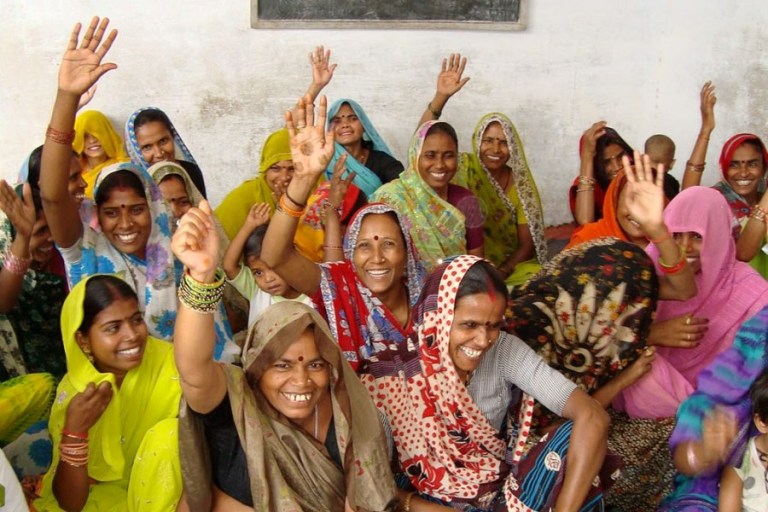
India’s economic future is increasingly being shaped by voices that have long operated outside formal balance sheets. As the country aspires to become a USD 5 trillion economy, one of the most underleveraged growth engines remains women—particularly those in rural and semi-urban India. While policy discussions often frame women’s participation in terms of labour force statistics, the reality on the ground is far more nuanced. Women have always been economic actors, managing risk, allocating resources, and sustaining households and communities through informal yet resilient financial systems.
 What is changing today is the ecosystem around them. Digital connectivity, evolving market access, and grassroots financial platforms are creating new pathways for women to translate this embedded financial intelligence into formal economic leadership. The implications go beyond individual income generation. Greater financial agency for women strengthens household stability, improves human capital outcomes, and contributes to more inclusive and durable economic growth.
In this guest column, Mr. Atish Jain, CEO of Choice Connect, explores how rural women are stepping into visible financial roles and why recognising and supporting this shift is critical to India’s long-term economic resilience.
Empowering the Female Economy: How Rural Women Are Becoming Financial Leaders
Spend time in India’s villages and small towns and a quiet truth becomes evident. Long before policy frameworks spoke of “financial inclusion” or “economic empowerment,” women were already running the real economy. They managed household budgets with discipline, navigated irregular incomes, organised informal savings, and acted as the first line of defence when financial stress appeared. In many families, they continue to influence almost every major financial decision, even if their role remains unofficial.
For decades, this form of economic leadership went largely unnoticed. It did not fit neatly into labour force surveys or formal employment categories, and so it remained invisible. Today, however, that invisibility is slowly fading. A combination of demographic shifts, digital access, and grassroots entrepreneurship is reshaping how women—especially in rural and semi-urban India—participate in the economy.
India has more than 300 million women in the working-age population, yet female labour force participation continues to remain below 30 percent. The gap is widest in rural regions, often interpreted as a sign of under-engagement. That interpretation misses a deeper reality. Women in rural India have always been economically active; they simply participate in ways that traditional metrics fail to capture. Their work is embedded in households, farms, micro-enterprises, and community networks rather than formal payrolls.
In villages, women are more likely to be self-employed, support family businesses, manage agricultural cash flows, or participate in community-led income activities. They run self-help groups, rotate savings, and extend informal credit with remarkable discipline. These systems may not carry institutional labels, but they perform critical economic functions. What has been missing is not capability or intent, but formal recognition and structured pathways to scale.
Rural women are, by necessity, skilled financial managers. Households outside urban centres operate amid uncertainty—seasonal agriculture, fluctuating wages, health emergencies, and limited access to formal safety nets. Over time, women have developed a sharp sense of financial prioritisation. They know when to save, when to spend, and when to defer. They plan around school fees, healthcare needs, and future contingencies, often with little margin for error.
Global development research consistently shows that when women control or influence income, the benefits ripple outward. Spending on education rises. Healthcare decisions become more proactive. Savings behaviour improves. These outcomes are not ideological arguments; they are practical observations repeated across geographies. Women tend to think in terms of stability and continuity, not just immediate returns.
What has changed in recent years is the environment around them. Rural India still accounts for more than 65 percent of the population, but it is no longer digitally isolated. Smartphone penetration has crossed 50 percent, bringing with it access to information, services, and platforms that were previously unreachable. Financial participation no longer requires physical proximity to branches or institutions. Digital tools, when designed well, can travel to the last mile.
This shift has quietly lowered many long-standing barriers. Women can now explore income opportunities without leaving their communities or disrupting household responsibilities. They can learn, transact, and engage at their own pace. The move from physical to digital has not solved everything, but it has opened a door that was firmly shut for decades.
On-ground experience across Tier-2, Tier-3, and rural markets reveals a pattern that challenges common assumptions. Women do not need to be convinced of the value of financial participation. What they need is clarity, dignity, and support. When income pathways are transparent and respectful, adoption follows. When engagement happens in local language and reflects everyday realities, confidence builds faster. When communities move together, individual hesitation fades.
Perhaps the most underestimated factor is early handholding. Many women disengage not because they lack interest, but because the first few months are overwhelming. Financial systems are unfamiliar, terminology is dense, and small mistakes feel costly. Where support is patient and consistent, participation stabilises. Where it is rushed or transactional, drop-offs are inevitable.
The impact of women entering the formal economy extends far beyond individual earnings. At the household level, additional income changes behaviour. Families plan better. Dependence on informal moneylenders reduces. Financial shocks become easier to absorb. Over time, these micro-shifts add up to stronger community resilience.
At a macro level, higher female workforce participation is widely recognised as a significant lever for long-term economic growth. More importantly, it improves the quality of that growth. Women’s income tends to be channelled into consumption that strengthens human capital—education, health, and nutrition—rather than speculative or short-term spending. The result is an economy that grows more steadily and inclusively.
Progress, however, remains uneven. Digital access does not automatically translate into digital confidence. Social norms continue to shape mobility and decision-making in subtle ways. Financial products are often designed with experienced users in mind, not first-time participants. And last-mile support remains inconsistent, particularly once initial enrolment targets are met.
These challenges are not insurmountable, but they require patience and design thinking. Evidence from inclusion programmes shows that failure is more often a function of poor execution than lack of demand. When systems adapt to users, rather than expecting users to adapt to systems, outcomes improve dramatically.
The rise of rural women as financial leaders is not a passing trend or a feel-good narrative. It reflects a structural shift rooted in India’s demographics, digital expansion, and changing aspirations. As women gain formal economic agency, the effects compound—reshaping households, strengthening communities, and stabilising local economies.
Empowering women financially is not about creating leadership from scratch. It is about recognising leadership that has always existed and giving it the tools to grow. When that happens, the benefits extend well beyond women themselves, shaping a more resilient and balanced economic future for the country.








.png)