Driving Change From the Ground Up: Lessons From India’s Electric Trucking Transition

India’s transition to clean mobility is often discussed in terms of policies, technologies, and targets. Yet its true success depends on the people who live this transition every day. Truck drivers, mechanics, and fleet operators form the backbone of India’s freight economy, but they are rarely placed at the centre of sustainability conversations. Nayi Soch Ki Sawaari seeks to change this by engaging directly with the informal trucking community and building awareness around electric trucks through trust, dialogue, and familiar formats.
In this interview, Mandira Kalra Kalaan, Senior Campaign Director and Head of Office at Purpose, shares insights from thousands of on-ground interactions that underline a critical lesson for the development sector. Sustainable transitions do not succeed through technology or policy alone. They succeed when people feel included, informed, and respected. From chai pe charcha and local-language games to conversations about livelihoods, dignity, and the future of the next generation, the initiative shows how mindset shifts happen when communities are treated as partners rather than beneficiaries.
Read the interview below to understand why India’s clean mobility journey must begin with those who keep the country moving.
Q&A
Q. Nayi Soch Ki Sawaari has engaged with truck drivers, mechanics, and fleet operators across different states. What, in your view, makes their role so crucial in India’s transition toward cleaner, zero-emission trucking?
A. It’s drivers who operate the trucks, mechanics who maintain them, and fleet owners who make the financial decisions. Policies, incentives, and technology are critical but so are also end-users who must be informed, convinced, and supported, so that we can attain the full benefits of the transition.
If this community trusts the idea and sees value in it - economic, operational, and emotional, they can potentially catalyse this change. We are already seeing drivers and fleet operators who have used electric trucks championing this transition thus helping the transition move faster and more meaningfully than any policy push alone.
Q. When engaging with the community on the ground, what are the first doubts or concerns people usually raise about electric trucks, and how do these conversations typically unfold?
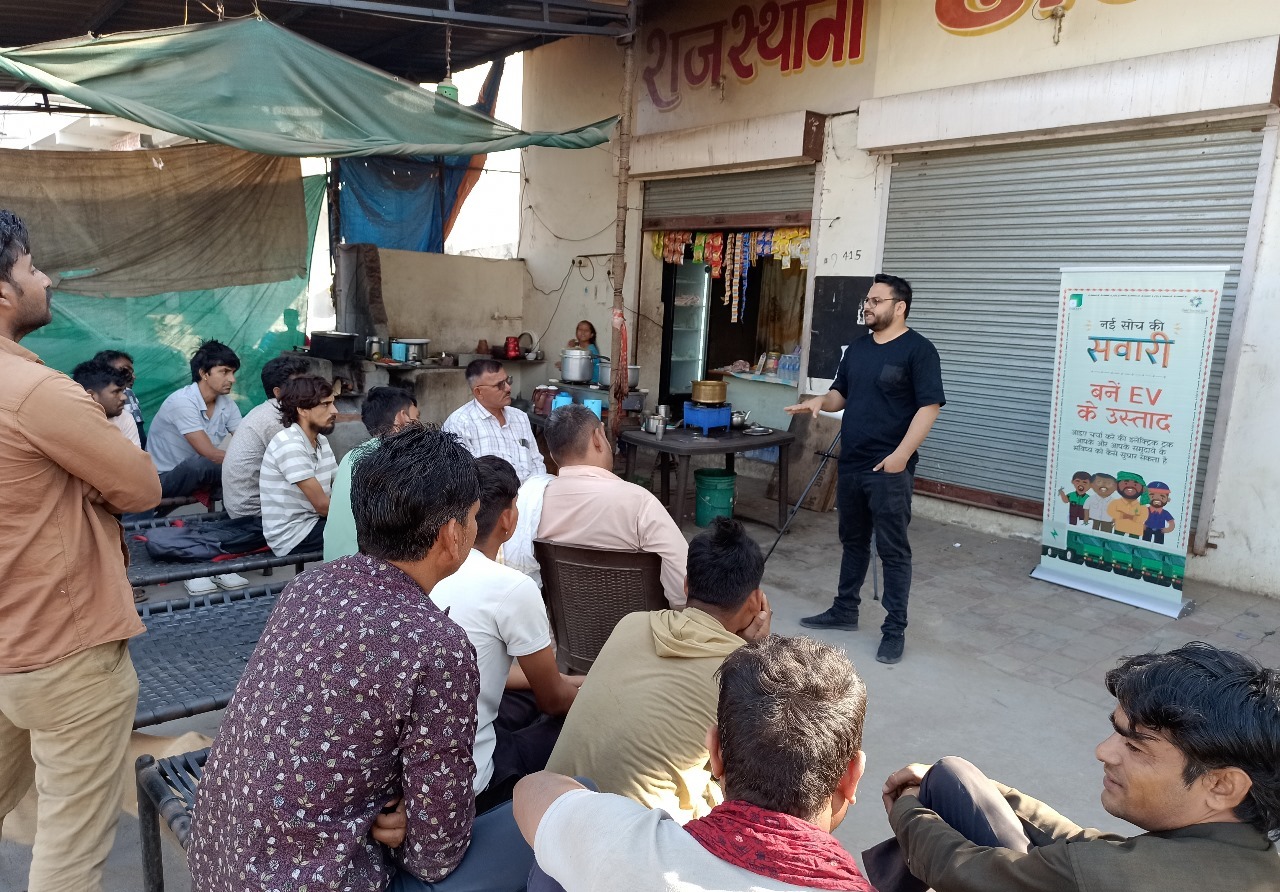 A. Most people have not even heard about electric trucks. Nayi Soch Ki Sawari’s custom designed offline interactions are how they are often introduced to electric trucks. We start with building a foundation of basic information about electric vehicles - what they are and how they function. We then dive into specifics about the vehicles as well as information to counter common myths and misconceptions. Instead of formal presentations, we use audience-friendly formats like chai pe charcha, open circle conversations, games like an adapted version of snakes and ladders - always in regional languages. Even the posters and demonstrations are designed to feel familiar, not technical.
These formats help people relax, participate and question openly. Once people understand that there’s space to question, disagree, debate, and learn, the tone shifts from fear to exploration and from doubt to informed curiosity. Several sessions begin with fear and hesitation, “Will I get electrocuted if I touch it?” and conclude with confidence and curiosity, reflected in the question, “How soon will these trucks be available in the market?”
Q. NSKS data indicates a significant increase in the number of fleet operators who now see electric trucks as a viable option. What factors do you believe are driving this positive shift in attitude?
A. Electric trucks as a technology are being backed by legacy OEMs in the automotive sector. Its superior performance, comfort of driving and ease of maintenance are lucrative benefits for many applications and use cases in the freight sector.
Hearing about its performance from fellow fleet operators and industry experts has helped build confidence amongst the fleet operators. Our podcast series - Get ZET, had a diverse set of experts from Ministry of Heavy Industries, Ashok Leyland, BillionE, ChargeZone and IIT Madras who helped bust myths and strengthen confidence in electric trucks. Once the fleet owners realise they won’t be the first mover alone, confidence rises.
Q. Drivers often mention comfort, ease of driving, and contributing to a cleaner future for their children. Is there a particular story or moment from the field that has stayed with you?
A. Between 2024 and 2025, we have interacted with over 3000 drivers. While it is difficult to point to a particular story, one thing that has stayed with me is their collective sense of responsibility towards their community - whether it is their direct family, village or even the country. During our initial interactions when we wanted to know about the potential benefits of electric trucks for them, we heard a few of them mention how technological progress in the sector is indicative of a nation's progress, some mentioned the role of eTrucks in reducing fuel imports and securing the country's energy independence. It was a reminder of their selfless service during the lockdown and the crucial role that this industry plays in not just the nation's economy, but in keeping the country running.
Q. Is there a human success story from your field visits—perhaps a driver, mechanic, or fleet operator—whose journey with electric trucks really captures the impact of this transition?
A. Definitely. We have interacted with many drivers who couldn’t be happier after switching to electric trucks. Veer Singh, based in Swaroopganj started driving an electric truck earlier this year. With a fixed route and assured work for a few years, he was able to move his family to Swaroopganj and get his child enrolled in a school there. Sohail, a driver based in Bangalore, is much happier after getting an opportunity to drive an electric truck. With a reduced turnaround time inclusive of scheduled breaks and paid meals, he now gets to go home to his family everyday whom he missed dearly. Veer Singh told us about how his peers couldn’t believe that the truck he was driving was switched on because of how silent it was. He was particularly proud when he told us about his company that is producing its own fuel as he pointed towards the solar panels that power the charging points. Benefits of fixed routes and long term contracts - that are essential for profitability of electric trucks - can be seen trickling down to the end users.
Q. Many mechanics start with worries about job security but end up showing real openness to learning EV skills. What have your conversations with them revealed about this change in mindset?
A. Most of the mechanics in the trucking industry do not have formal training. They have learnt on-the-job. They have seen many changes in the industry and are willing to adapt to new technology. It is not change that they are afraid of. Once we explain the transition, many show willingness to upskill. However, they have valid concerns about lack of avenues to upskill - awareness around skilling institutes, courses available and investment in these upskilling courses. Mechanics show resilience and will be able to catch up eventually and sooner if upskilling initiatives effectively target them.
Q. India has strong policies for clean mobility, yet the people most affected are often the last to be involved. From your experience, what is the biggest gap you see between clean mobility policy and the reality on the ground?
A. Right from Fame 1 to the most recent PM-E Drive policy that has been promulgated, policies have been well intentioned and forward looking. The vision of zero emission trucking being achieved by 2050 is ambitious and requires scaling of pilots that have been underway for the last year to achieve unit economics. The user layer equates uncertainty with loss of livelihood and income. Like mechanics, the entire on-ground trucking community is resilient. They are willing to adapt to the transition. Addressing their anxieties around cost of transition, infrastructure availability and resale value and technology obsolescence risk, helps strengthen pilots and actualise the vision.
Q Your events use accessible formats like games, local languages, radio shows, and simple demonstrations. What have these methods taught you about making technical concepts relatable for grassroots communities?
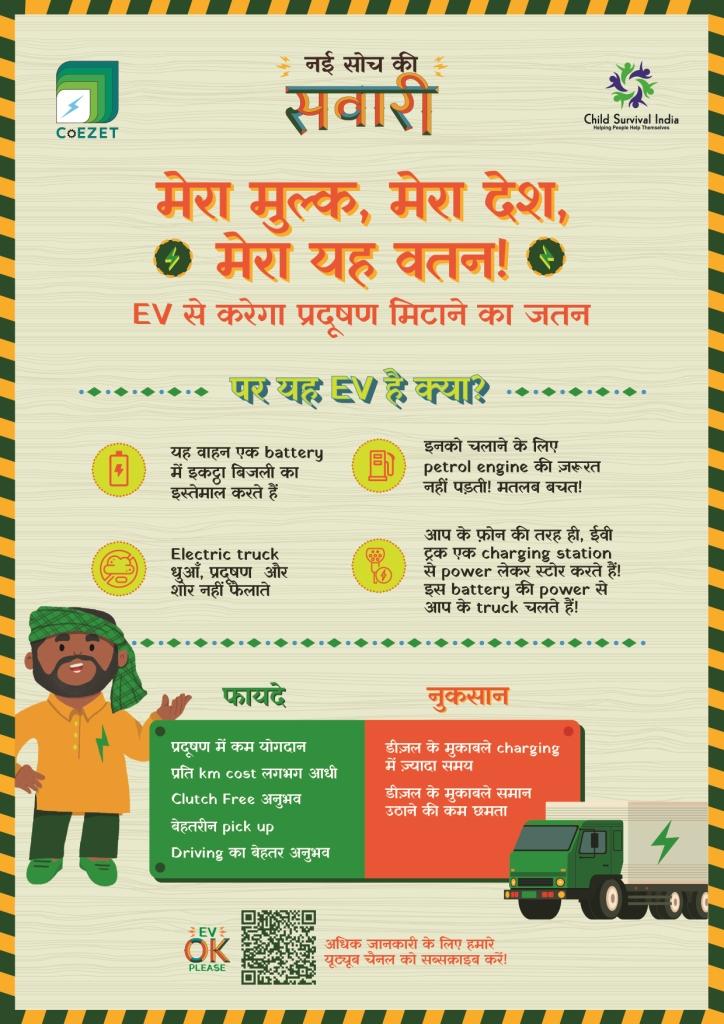 A. They’ve taught us that information becomes powerful and empowering only when it becomes relatable. Chai pe charcha, interactive games, and relatable demonstrations make learning engaging rather than intimidating, making it a two-way dialogue rather than one-way communication.
Using local language content, visual tools and analogies has helped make concepts like charging, total cost of ownership and battery safety understandable and relevant. It turns technical subjects into shared dialogue, and that is where real mindset shifts begin.
People are more willing to engage when they feel heard and seen. These formats increase familiarity and show respect towards their opinions - making the change feel less top-down
Q. With India facing a driver shortage alongside rising freight demand, how do you see initiatives like Nayi Soch Ki Sawaari helping to improve dignity, awareness, and long-term interest in the trucking profession?
A. Not just drivers but we’ve heard many tell us that they don’t want their children to join the industry. This is mostly because of lack of respect and dignity in this field. Many feel invisible, unheard and unappreciated despite the crucial role they play in the nation's economy.
Initiatives like NSKS aim to create a platform for their needs and concerns. Once included, the end-users hold the potential to become champions of the transition. Through this initiative we have built platforms like EV OK Please where we spotlight both - experts from the industry and experts from the field i.e drivers, fleet owners. The project aims to build two-way channels between different tiers of the ecosystem to encourage mutually beneficial discussions.





.png)