A Small Idea, A Big Heart: A 10 Year Old’s Lesson in Giving Back
As 2025 draws to a close, here’s a simple story that fills you with hope. At TheCSRUniverse, we often bring to our readers initiatives that demonstrate large-scale impact or disruptive ideas. This interview, however, is different. It is not about funding, complex models, or grand strategies- it is about intent, empathy, and the heartfelt resolve of a child who chose to help, using almost nothing beyond time, curiosity, and care.
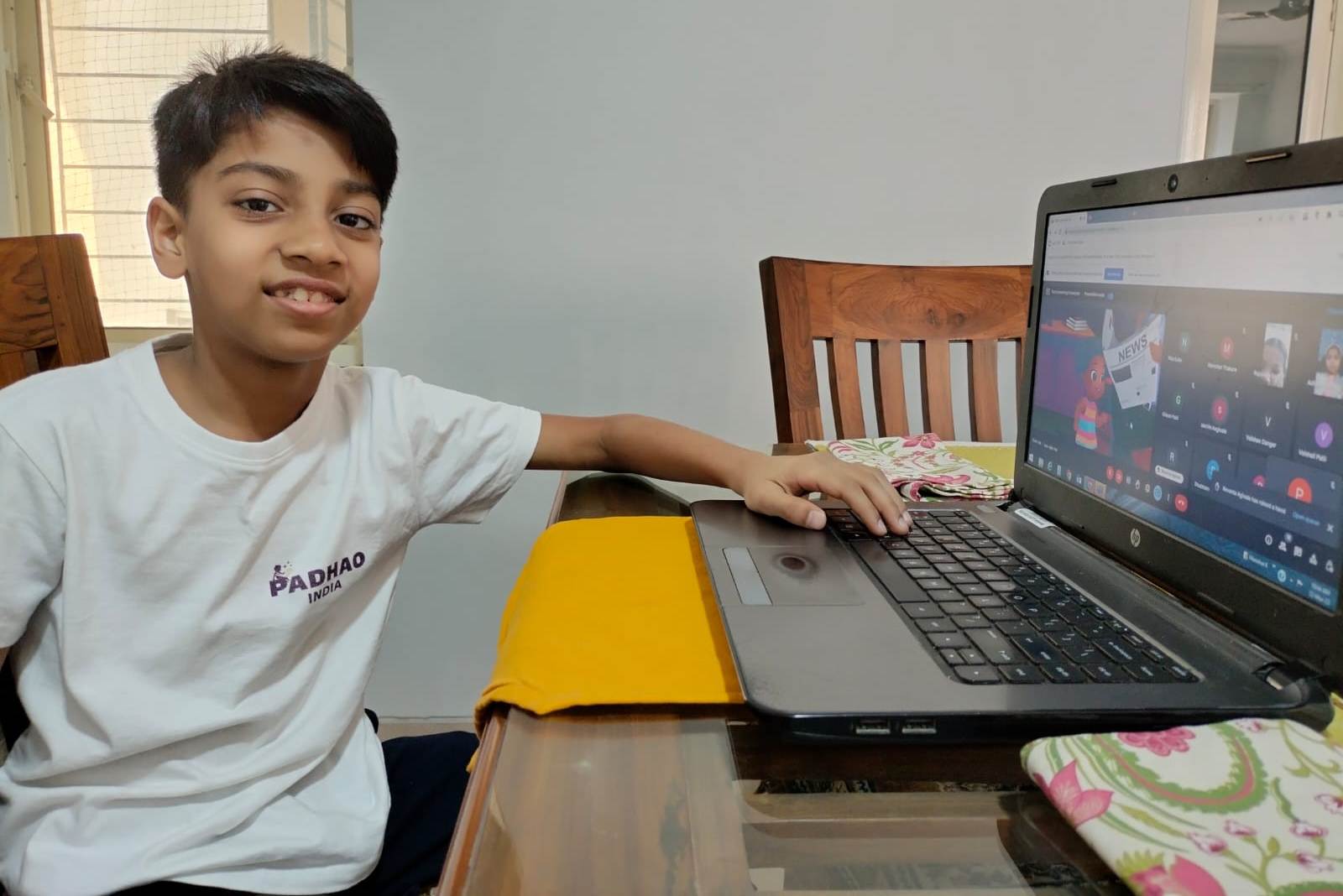
Meet Pranit Dharewa, a 10-year-old student of Witty International School, Mumbai, and the young founder of Padhao India- a volunteer-driven, peer-to-peer learning movement supporting underprivileged children across India. What began as a small, personal effort to share learning has grown into a structured initiative involving senior student volunteers who mentor younger learners online, nurturing confidence, consistency, and a love for learning.
With no external funding and a strong focus on zero-cost impact, Padhao India has enabled over 12,000 hours of learning and reached more than 2,000 children nationwide. Pranit and “Padhao India” have received significant recognition, including the International Education Award 2023 by GESS UAE, the National Education Award 2022, and a felicitation by the Governor of Maharashtra.
Read along to see how a well-meaning thought is turning into a movement:
Q. Can you briefly introduce yourself and share what inspired you to start Padhao India?
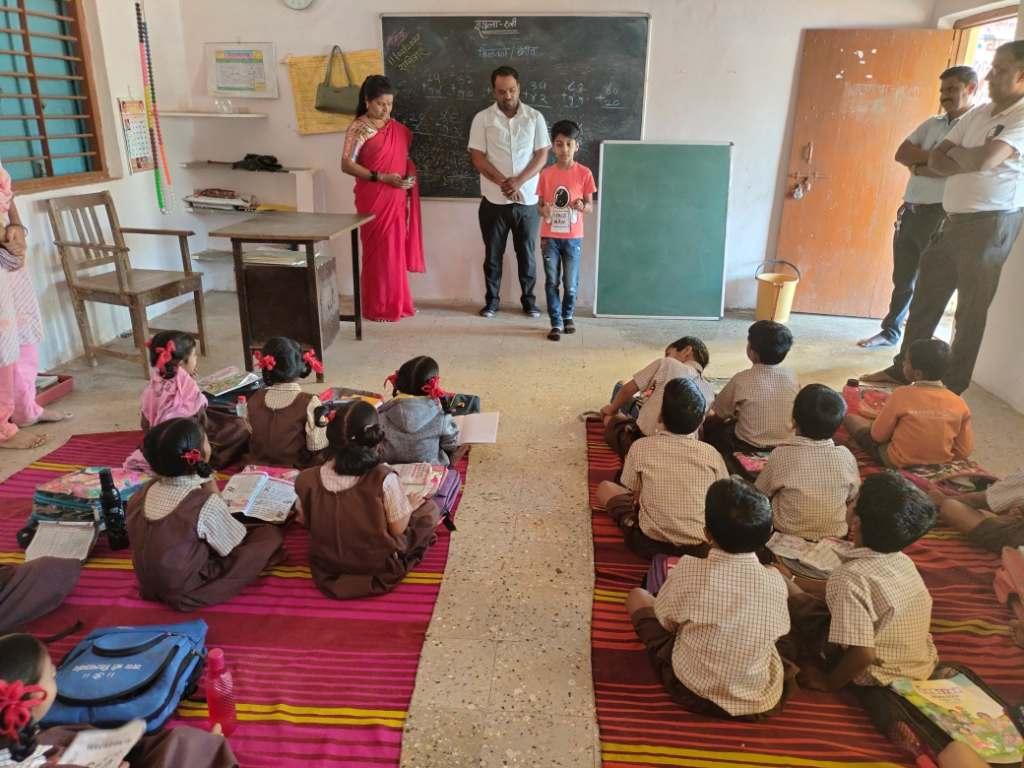 A. My name is Pranit Dharewa, and I am a student of Witty International School, Mumbai. I started Padhao India initiative during the COVID-19 lockdown at the age of 6, when schools were shut and many children, especially underprivileged students, were completely disconnected from learning.
During that time, I noticed that while some children could continue learning online, many others had no access to education at all. Around the same time, I saw my parents helping families by distributing food kits and essential supplies. That made me think about how I could contribute in my own way.
One newspaper headline that said “Schools Shut” stayed with me. It made me wonder about children from unprivileged backgrounds who were not learning at all. I realised that if I was learning, I could share what I knew with others. That simple thought became the foundation of Padhao India.
Q. How did you begin this journey, and how did your parents support you in your work?
A. I started Padhao India at the age of six by conducting online learning sessions for children who were not attending school, primarily underprivileged students. I shared basic concepts, reading, numbers, and general awareness based on what I was learning myself. I never saw myself as a teacher, but as someone sharing knowledge and encouraging curiosity.
My parents played a very important role by giving me guidance, structure, and constant encouragement, while ensuring that the initiative remained child-driven. They helped me stay disciplined and balanced my learning with my responsibility towards Padhao India.
Q. What role did your teachers and school play while you were trying to create Padhao India?
A. My teachers and school management at Witty International School supported me all along. Their guidance helped me understand that education is not only about academics but also about empathy and social responsibility.
My school has been a guiding force in my journey. It recognised my intent early and provided constant encouragement, platforms, and mentorship. Teachers and school leadership helped me refine my ideas and remain consistent with my purpose.
I would like to specially acknowledge Ms Sheetal Kapoor, Curriculum Head India, Global Schools Group, and Mr Devidutta Kanungo, Deputy Country Director, Global Schools Group, for their continuous support. Their guidance and encouragement helped me reach a wider audience and strengthen Padhao India as a meaningful learning movement.
Q. What were some of the initial challenges you faced, and what achievements stand out for you so far?
A. In the beginning, managing online sessions was challenging. Children would unmute themselves, sessions would get disrupted, and attention spans varied. I also had to help parents with Google Meet links, presentations, and technical issues. For a young child, this required a lot of patience and calmness.
Over time, I learned how to communicate better, stay patient, and manage sessions smoothly. Even after schools reopened, I continued my sessions with the same consistencyto ensure learning continuity for underprivileged children.
One of my biggest personal milestones is completing over 1,300 hours of learning sessions on my own. Collectively, Padhao India has crossed 12,000 plus hours of learning. Academically, many children who were earlier scoring C grades moved to B and A grades. Parents also shared that their children became more confident, curious, and interested in learning.
Padhao India is a volunteer driven initiative and does not run on external funding. The focus has always been on learning, consistency, and impact rather than resources.
Q. What is the current model of Padhao India?
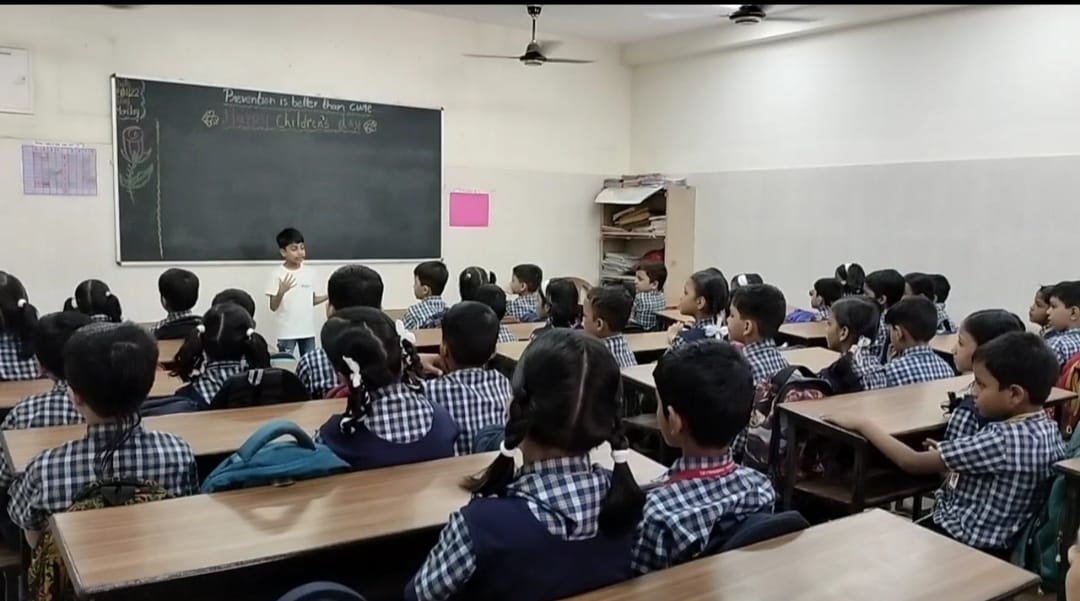 A. Today, Padhao India is a structured and scalable peer-to-peer learning initiativefocused on creating access to education for underprivileged students. It is guided by a Mentor Board and Advisory Board comprising senior professionals from different industries who help with strategy, scalability, and sustainability.
The program follows a peer-led model supported by senior student volunteers called Changemakers. These volunteers are typically students from Class 11 onwards and college students pursuing courses such as CA, MBA, Architecture, Management, and Post Graduation programs.
Currently, Padhao India has over 80 active Changemakers. Recently, we onboarded 200 new children, taking the total number of children in the program to 450. The model focuses on structured learning, empathy, and consistency, while ensuring that volunteers also grow personally and professionally.
Q. What recognitions have you received, and what are your future plans for Padhao India?
A. I have been fortunate to receive several recognitions for my work, including the National Education Award 2022 for Most Socially Relevant Initiative and the International Education Award 2023 for Positive Change in Education. I was also felicitated by the Hon. Governor of Maharashtra with a Letter of Appreciation and participated in the Impact Innovators Summit 2024 at IIT Bombay as India’s youngest changemaker.
Looking ahead, my goal is to onboard 500 senior student volunteers from colleges and positively impact the lives of 2,500 underprivilegedchildren across India. I strongly believe that nation-building is not limited to adults and that children and youth can also contribute meaningfully to society.

.png)