
Strengthening Groundwater Management for India’s Water Future
.jpeg)
Groundwater constitutes nearly 99% of the Earth’s liquid freshwater and remains one of the most critical natural resources supporting human development, food security, and ecological stability. In India, its role is particularly central—groundwater accounts for around 62% of irrigation needs, supplies nearly 85% of rural drinking water, and meets about 50% of urban water demand.
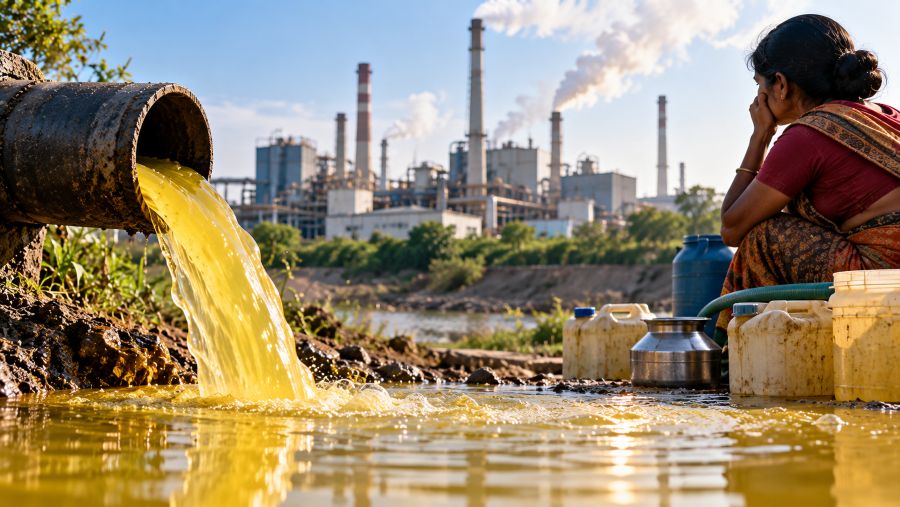
With rising population levels, intensification of agriculture, rapid urbanisation, and expanding industrial activity, pressure on groundwater resources has increased significantly across the country. Over-extraction and inefficient use in several regions have led to declining water tables, quality concerns, and growing risks to long-term water security. Against this backdrop, the need for scientifically informed and sustainable groundwater management has become increasingly urgent.
Water governance in India is primarily a State subject, placing responsibility for regulation and management with State Governments. However, the Central Government plays an important facilitative role by supporting States through policy guidance, technical assistance, and financial support. This coordinated approach aims to strengthen conservation, regulation, and sustainable use of groundwater resources nationwide.
Key Central initiatives are being implemented under the leadership of the Ministry of Jal Shakti, in collaboration with other relevant ministries and agencies. These programmes focus on improving groundwater monitoring, promoting water-use efficiency, encouraging community participation, and adopting region-specific management strategies based on scientific assessment.
The emphasis on data-driven planning and long-term sustainability reflects a shift from short-term extraction to responsible stewardship of groundwater. By combining State-level implementation with Central support, the government seeks to build resilience against climate variability while ensuring reliable water access for agriculture, households, and industry.
As India looks to secure its water future, strengthening groundwater governance and management remains a cornerstone of national water policy, with coordinated action seen as essential to balancing development needs and environmental sustainability.