
BMW Group–UNICEF STEM Initiative Expands Access to Inclusive Learning in India
Gurugram, January 27, 2026: BMW Group and UNICEF have highlighted the first-year impact of their global BRIDGE partnership in India, an initiative aimed at strengthening foundational learning and expanding access to inclusive, hands-on STEM education. Since its launch in December 2024, the programme has reached 110,216 students and trained 397 educators across multiple states.
The BRIDGE initiative is part of a long-term collaboration between BMW Group and UNICEF running through 2030. In India, it follows a two-pronged approach: improving foundational literacy and numeracy in early grades, and enabling experiential STEM learning for adolescents. The programme places a strong emphasis on gender inclusivity, with a focus on encouraging girls’ participation in science, technology, engineering and mathematics.
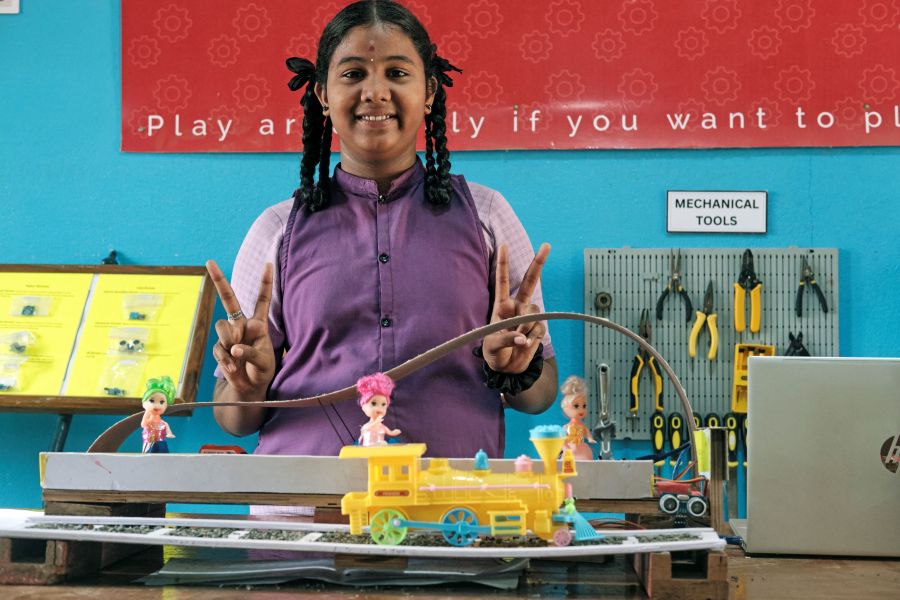
Implemented in collaboration with state governments, the initiative is currently active in Jharkhand, West Bengal, Assam and Tamil Nadu. It supports under-served schools through low-cost maker spaces, STEM kits, new science labs and teacher capacity-building programmes, creating more engaging and inclusive learning environments.
Hardeep Singh Brar, President and CEO, BMW Group India, said, “The BMW Group’s global partnership with UNICEF underscores our commitment to education as a catalyst for lasting social and economic progress. In India, we are proud of the strides made in strengthening foundational learning and creating opportunities for children, especially girls, to explore STEM. We remain dedicated to supporting scalable, high-impact initiatives that empower the next generation for a brighter future.”
Cynthia McCaffrey, UNICEF India Representative, said, “Today’s employment opportunities come with greater demands for competencies in STEM. Girls, in particular, miss out on opportunities to learn and practice STEM. For this very reason, the BMW-UNICEF partnership is investing in making education more accessible and inclusive, especially for girls, leading to greater economic and social self-reliance.”
During the first year, 397 educators across 142 schools were trained in evidence-based practices to strengthen early-grade literacy and numeracy, while digital webinars engaged 17,830 teachers nationwide. Parental engagement was also reinforced through regular meetings to strengthen home–school collaboration.
State-level interventions demonstrated context-specific innovation. In West Bengal, a STEM instructional manual featuring 90 experiential activities was developed, along with 10 maker spaces and a digital supervision app that has logged over 8,000 school visits. Assam piloted hands-on STEM content in 30 schools, reaching more than 7,000 students. In Jharkhand, bilingual textbooks and activity-based modules were introduced, alongside the establishment of STEM labs and kits in girls’ residential schools. Tamil Nadu saw the rollout of ‘STEM on Wheels’, bringing mobile science and mathematics demonstrations to rural and coastal schools.
Globally, the BMW Group–UNICEF partnership aims to reach more than 10 million children and young people annually through education and training initiatives across India, South Africa, Brazil, Mexico and Thailand, reinforcing a shared commitment to future-ready, inclusive education systems.