What Japan Teaches Us About Sustainable Development
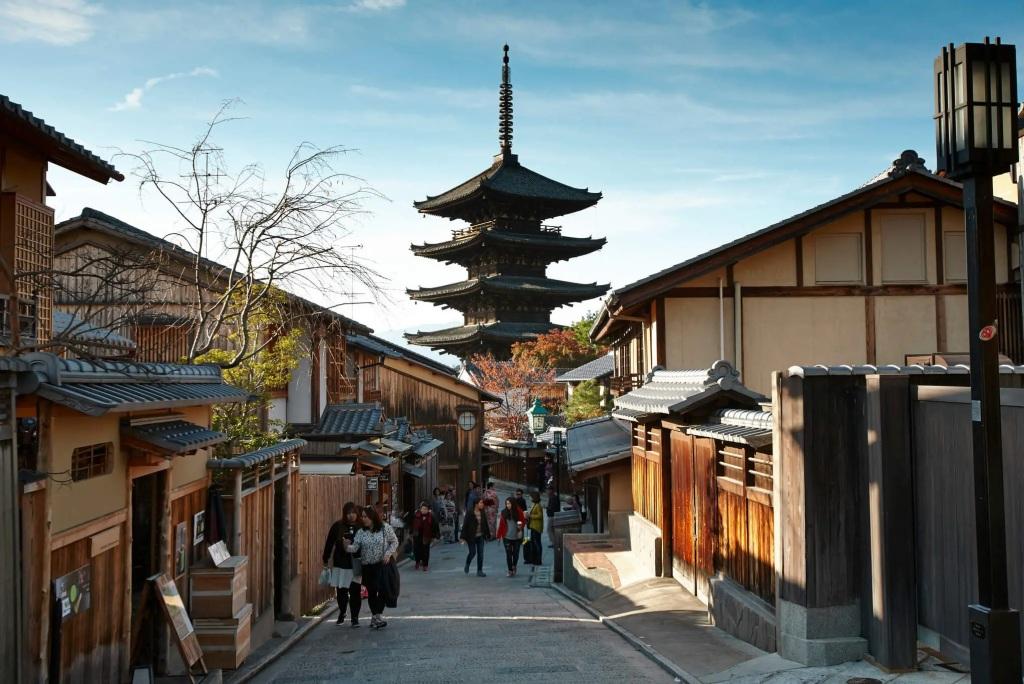
Sustainable development is often framed as a race for expensive technologies, sophisticated infrastructure, and capital-intensive solutions that only a handful of countries can afford. From an editorial perspective, this narrative feels increasingly incomplete. For CSR leaders tasked with delivering measurable impact under tightening ESG expectations, the question is no longer whether sustainability matters, but how to pursue it in ways that are scalable, affordable, and credible. Some of the most effective sustainability practices in the world do not emerge from scale alone, but from restraint, cultural discipline, and community participation. Japan, a country that has learned to live within limits for decades, offers lessons that are not only relevant for India, but urgently needed.
As India and Japan deepen their strategic partnership in the mid-2020s, the conversation has matured beyond roads, metros, and industrial corridors. For Indian corporates and CSR foundations, this shift opens up a practical learning window: how Japan integrates sustainability into everyday systems rather than treating it as a parallel intervention. The emphasis on Green Transformation, or GX, signals a shared recognition that growth must now be resource-efficient, climate-resilient, and socially rooted. Japan’s experience shows that sustainability does not have to be futuristic to be transformative. Often, it is quietly practical.
From Mottainai to Circular Value Creation
At the heart of Japan’s environmental ethic lies the idea of mottainai, a word that loosely translates to regret over waste. It is not a slogan or a policy instrument, but a cultural reflex that shapes daily behaviour. This ethos finds its most visible expression in places like Kamikatsu, a small town that has become globally known for its zero-waste ambition. Residents there sort waste into more than 40 categories, enabling recycling rates that many large cities can only aspire to. What makes Kamikatsu instructive is not the number of categories, but the fact that the system works through social consensus rather than technological force. India is not starting from zero on this front. The SWaCH cooperative in Pune, a worker-owned collective of waste pickers working with the municipal corporation, has demonstrated for years that decentralised segregation, door-to-door collection, and material recovery can deliver both environmental outcomes and dignified livelihoods. Similarly, Indore’s ward-level composting and bio-methanation units show how local processing of wet waste can reduce landfill dependence when backed by consistent governance. These Indian examples echo the same principle Japan has institutionalised: circularity works best when it is local, social, and trusted.
For India, where waste management remains one of the most persistent urban and rural challenges, the relevance is clear. India already has a vast informal ecosystem of waste pickers and recyclers who recover value from what cities discard. The Japanese policy framework known as the Regional and Circular Ecological Sphere builds on this very idea of local loops, where resources are reused within a region through collaboration between citizens, local governments, and small enterprises. Instead of investing only in large, centralised waste-to-energy plants that often struggle with mixed waste, Indian CSR programmes and urban missions could focus on decentralised sorting, repair, and upcycling hubs. Japan’s textile recycling initiatives, including startups that chemically or mechanically convert old garments back into usable fibres, offer a template. In the Indian context, similar models are already emerging through flower-waste recycling near temples and plastic reuse in construction materials. What Japan demonstrates is how such efforts can be formalised, dignified, and scaled through replication rather than over-expansion.
Frugal Innovation That Reduces Demand First
Another striking aspect of Japan’s sustainability journey is its emphasis on frugal innovation. Many interventions focus on reducing demand before increasing supply. A widely adopted practice across Japanese cities is the use of green curtains, where climbing plants such as bitter gourd are grown on trellises outside buildings. These living screens lower indoor temperatures, reduce reliance on air conditioning, and improve urban microclimates. In India, where heat stress is becoming a public health issue and electricity access remains uneven, this low-cost solution could be transformative for schools, anganwadis, and low-income housing if supported through housing missions and CSR-funded retrofitting. Encouragingly, similar thinking is already visible through cool-roof programmes in cities such as Hyderabad, Ahmedabad, and Surat, where reflective surfaces and passive cooling have reduced indoor temperatures by several degrees. These initiatives reinforce the Japanese insight that cutting energy demand is often the most cost-effective climate action.
Similarly, Japan has long invested in small-scale biogas and anaerobic digestion systems at the municipal and community level. Vegetable waste, weeds, and food scraps are treated not as liabilities but as energy inputs. While the exact technologies vary, the principle is consistent: manage organic waste close to where it is generated. India’s Gobar-Dhan programme and the spread of community-scale biogas plants across several states reflect this same logic, converting agricultural residue and organic waste into clean energy and organic manure. Private sector initiatives such as compressed biogas plants that process municipal and agri-waste further demonstrate how decentralised energy solutions can be commercially viable when supported by enabling policy and patient capital. For rural India, where crop residue burning continues to choke cities each winter, adapting these decentralised bioenergy models could reduce pollution while providing clean cooking fuel or electricity. The lesson here is not to import machinery wholesale, but to import the systems thinking that connects waste management with local energy needs.
Energy efficiency in Japan also reflects a philosophy of localisation. The traditional kotatsu, a heated table that warms people rather than rooms, may seem culturally specific, but it embodies an idea that India can readily adopt. Cooling or heating the entire volume of a space is often unnecessary, especially in community settings. Whether through shaded study areas, spot cooling in classrooms, or energy-efficient fans combined with passive design, the focus should shift to comfort with minimal consumption. Japan’s approach reinforces the idea that sustainability begins with asking how much is enough.
Materials, Manufacturing, and the Case for Greener Industry
Beyond behaviour and systems, Japan’s material innovation ecosystem offers important cues. Japanese firms and research institutions have been pioneers in developing cellulose nanofibres derived from wood and bamboo. These materials are lightweight, extremely strong, and biodegradable, making them promising alternatives to plastics and metals in certain applications. India, particularly its northeastern states, has abundant bamboo resources and a growing policy push for bamboo-based livelihoods. Strategic technology partnerships and joint research initiatives could help translate Japanese material science breakthroughs into locally manufactured products, generating green jobs while reducing dependence on carbon-intensive materials. India already offers promising parallels through engineered bamboo boards and bamboo-based housing emerging from the Northeast, supported by research institutions and state missions. Likewise, low-carbon construction techniques such as compressed stabilised earth blocks, used in schools and housing projects in places like Auroville and Kutch, underline that greener materials are not experimental ideas but field-tested solutions ready for wider adoption.
In construction, Japan has also advanced the use of high-performance concrete panels and prefabricated systems that reduce material use and improve durability. While these innovations may not immediately be low-cost, their lifecycle benefits are significant. For India’s affordable housing programmes, selectively adopting such approaches for public buildings, disaster-resilient housing, and dense urban developments could improve sustainability without compromising scale.
Community Stewardship and Nature-Positive CSR
Perhaps the most underappreciated lesson from Japan lies in community stewardship of nature. The satoyama landscape, where forests, farmland, and human settlements coexist, is managed collectively to sustain biodiversity and livelihoods. This approach resonates strongly with India’s traditional commons, from grazing lands to sacred groves. Japan’s recent emphasis on recognising community-managed areas as legitimate conservation spaces aligns with global efforts to protect biodiversity beyond formal protected areas. For Indian CSR and development practitioners, this underscores the importance of investing in governance, not just infrastructure. Projects that empower communities to manage water bodies, forests, and coastal ecosystems are far more likely to endure than externally driven interventions. India’s long experience with joint forest management, sacred groves, and community-led watershed institutions such as pani panchayats provides a strong domestic parallel to Japan’s satoyama model. For CSR leaders, the implication is clear: investing in governance capacity and local stewardship can deliver biodiversity outcomes that persist well beyond project cycles.
What This Means for CSR Leadership in India
Translating these lessons into action will require Indian stakeholders to rethink how partnerships with Japan are structured. Decentralised renewable energy systems, such as island microgrids developed in parts of Japan, could inform electrification efforts in India’s remote and tribal regions. Joint sustainability incubators that bring together Indian engineers and Japanese firms could help adapt precision technologies to Indian conditions. The eco-town model pioneered in cities like Kitakyushu, where industrial waste from one process becomes input for another, offers a compelling vision for India’s industrial clusters if supported by policy alignment and long-term financing.
An Asian Sustainability Compact
The India-Japan sustainability partnership is not about imitation, but interpretation. Japan brings discipline, efficiency, and a deep respect for resources. India brings scale, diversity, and an unmatched capacity for impact. Together, they offer an Asian model of development that values continuity over consumption and resilience over excess.
The Takeaway for Corporate India
From an editorial perspective, the real takeaway from Japan is refreshingly simple. The most powerful sustainability solutions are not always the most expensive or technologically dazzling. They are the ones communities understand, adopt, and refuse to discard. In a world racing toward 2030 targets and beyond, that may be the most valuable lesson of all.


.jpg)